
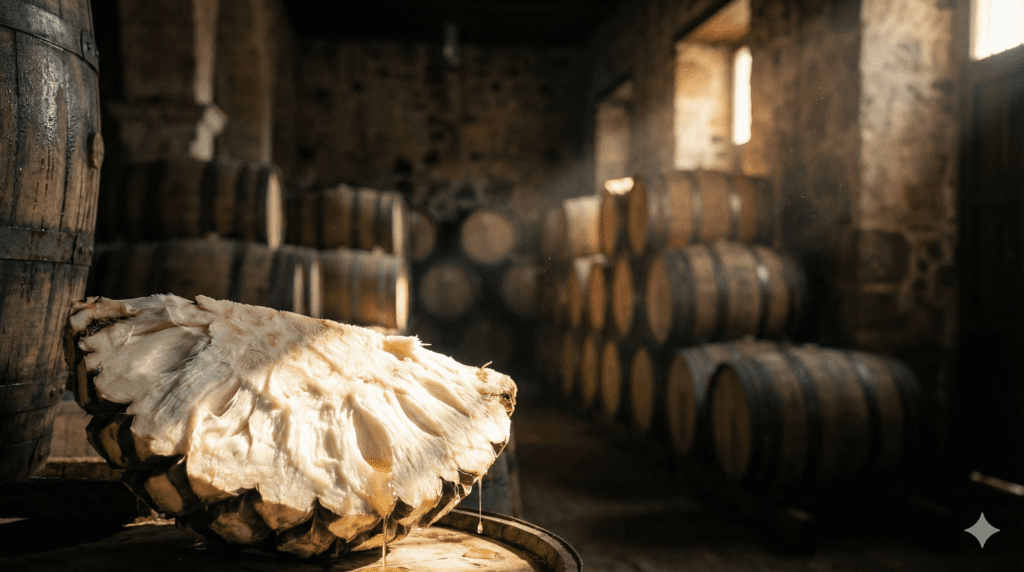
What most people don’t know about tequila is this:
Tequila is not meant to taste like oak.
Oak is not the hero. Agave is.
Somewhere along the way—thanks to whiskey thinking, marketing hype, and consumer confusion—oak became the loudest voice in the room. And when oak shouts, the agave disappears.
So let’s reset the conversation and do this right.
This is the definitive breakdown of the tequila aging barrels used today, what they previously held, and how each one should influence the spirit—not dominate it. Because in real tequila, the barrel whispers. It’s a philosophy we live by (and taste daily) on our Jalisco Tequila Tour, but before you book a flight, you need to understand the mechanics.
First Principles: Why Tequila is “Aged in the Field”
To understand barrels, you have to understand the plant. This is the fundamental difference between tequila and whiskey that most marketing conveniently ignores.
Grain spirits like whiskey are made from crops harvested annually. The “age” comes almost entirely from the barrel. The wood does the heavy lifting because the raw distillate starts as a relatively blank canvas.
Tequila is different. Tequila is already “aged”—in the field.
A Blue Weber agave plant spends 6–8 years in the ground before it ever sees a still. It spends nearly a decade building sugars, absorbing minerals, and pulling terroir from the red volcanic soil of Jalisco. That flavor complexity is hard-earned. Barrel aging is meant to frame that work, not replace it.
The “Raw Piña” Moment
The first time this really clicked for me wasn’t in a barrel room—it was standing in an agave field in Jalisco with a master distiller.
We cut into a mature Blue Weber agave, and he handed me a piece of raw piña to taste. It was sweet, vegetal, mineral, and alive. It tasted complete.
Then he looked at me and said, “This is where tequila is made. The barrel just finishes the sentence.”
That moment reframed everything for me. If the agave tastes this expressive before distillation, why would we ever want oak to erase it? That is the standard we hold every bottle to. If you can’t taste that 8-year journey in the glass, the barrel has failed.
The Rules Nobody Mentions (But They Matter)
Under Mexico’s tequila standard (NOM-006), the regulations for aging are strict but surprisingly broad. Official aged categories must be matured in oak or encino (holm oak) barrels.
If you are drinking Añejo or Extra Añejo, there is another critical rule: the aging vessel is capped at 600 liters. This ensures enough wood-to-spirit contact. If the container is larger than that, it doesn’t legally count as aging for those categories.
Here is the legal backbone you need to know:
- Reposado (Rested): Aged at least 2 months.
- Añejo (Aged): Aged at least 1 year in barrels no larger than 600L.
- Extra Añejo (Ultra Aged): Aged at least 3 years in barrels no larger than 600L.
That is the law. Now let’s talk about the reality.
The “Microphone vs. Megaphone” Philosophy
Just because you can use new oak doesn’t mean you should.
In the world of high-integrity tequila, used barrels are the gold standard.
- New Oak is a Megaphone: It shouts flavor. It adds aggressive vanillins and tannins that steamroll the delicate agave notes.
- Used Oak is a Microphone: It amplifies the spirit. It adds structure and roundness without stripping away the identity of the plant.
If a producer doesn’t have restraint, new oak turns tequila into a “whiskey clone” very fast. That is why the vast majority of the world’s best tequila is rested in barrels that have lived a life before they ever arrived in Mexico.
The Workhorse: American Oak (Ex-Bourbon)
This is the most common barrel influence in tequila—and for good reason. It works.
The relationship between tequila and American whiskey is symbiotic. By law, Bourbon must be aged in new charred oak barrels. Once that barrel is used one time, the bourbon distiller can’t use it again.
But that barrel is perfect for tequila. The bourbon has already stripped out the harshest, most aggressive wood tannins, leaving behind a seasoned vessel ready to frame the agave.
What American Oak Adds (The “Butter” Profile)
When you taste a classic Reposado or Añejo, you are likely tasting American White Oak (Quercus alba).
Think of American Oak like butter used generously in a sauce.
It adds richness, sweetness, and a creamy texture that hits the palate immediately.
- Primary Flavors: Vanilla, caramel, coconut, sweet baking spices, and maple.
- Mouthfeel: Round, coating, and oily.
The Agave-First Test
Because American oak is so sweet and rich, it is easy to abuse. Many additives (like artificial vanilla) are designed to mimic the flavor of American oak, but they dial it up to unnatural levels.
How to tell the difference:
If you take a sip and the first thing you taste is vanilla cake batter or suntan lotion (coconut), that’s not the barrel—that’s usually a lab trick. Real American oak influence should come after the cooked agave, offering a warm, spicy hug—not a sugar rush.
Precision Over Power: French Oak
If American oak is the workhorse, French oak (Quercus robur / Quercus petraea) is the thoroughbred. It usually extracts more slowly and brings a completely different kind of structure to the spirit.
These barrels often arrive from the wine world or Cognac houses. Because the grain of the wood is tighter, the interaction is different.
The “Olive Oil” Distinction
To understand the difference between these two woods, look at them through a chef’s lens:
- American oak is like butter used generously. It adds sweetness, richness, and roundness fast.
- French oak is like finishing olive oil. Restraint, structure, and precision matter more than quantity.
French oak doesn’t just coat the palate; it sharpens it. It tends to add a drier, more structured tannin profile that creates a “polished” mouthfeel.
- Primary Flavors: Dried fruit (apricot, raisin), subtle baking spice (cinnamon, clove), and a distinct floral lift.
- Best For: Añejo and Extra Añejo tequilas where the producer is chasing elegance, not candy-store sweetness.
Barrels Used for Distinctive Flavor Twists
Beyond the two main pillars of oak, we are seeing a surge in “exotic” casks. This is where things get interesting—and dangerous.
When used correctly, these barrels add layers of complexity that agave alone can’t achieve. When used poorly, they turn tequila into a cocktail. The rule remains the same: These barrels should add accent marks—not rewrite the language.
1) Sherry Casks (Oloroso & Pedro Ximénez)
Barrels that previously held oxidative Spanish sherry are powerful.
- What they add: Nutty notes, deep raisin, fig, and dates.
- The Risk: Sherry is dominant. If the tequila sits too long, it becomes a “dessert spirit,” tasting more like the wine than the agave.
2) Rum Casks (The Hidden Gem)
This is the missing chapter in most tequila education, and personally, one of my favorites when done right.
- What they add: Tropical warmth. Think brown sugar, banana bread, and baking spice.
- Why it works: Because rum is also sugar-based (molasses or cane juice), it shares a DNA with agave that whiskey doesn’t. It offers a softer sweetness that harmonizes rather than clashes.
3) Cognac & Wine Casks
This is a “wine drinker” move. Ex-Cognac or Bordeaux barrels bring sophisticated tannins, orange peel, and red fruit tones. It is high-risk, high-reward. Wine influence can get “muddy” if the timing isn’t tight, so these are often used for short finishes rather than full-term aging.
Want to taste the difference?
Reading about rum finishes vs. French oak is one thing; tasting them side-by-side with the master distiller who made them is another.
On our Jalisco Tequila Tour, we visit the cellars where these experiments happen—and we taste straight from the thief. Check our upcoming tour dates here.
Barrel Variables That Actually Control the Outcome
It’s not just about the wood type. How the barrel is treated determines whether it will support the agave or suffocate it.
1. Char vs. Toast
Before a barrel is filled, the inside is exposed to fire.
- Char: An open flame burns the wood, creating a layer of charcoal. This acts like a filter, stripping away sulfur and harsh compounds while caramelizing wood sugars. (Think: bold, sweet, smoky).
- Toast: The wood is heated gently (toasted) without burning. This releases deeper, more subtle spicy compounds like eugenol (clove) and vanillin.
The Rule: Heavy char equals heavy flavor. Lighter toast equals more nuance. For agave-forward tequilas, a light-to-medium toast is often the sweet spot.
2. Barrel Size Matters
The smaller the barrel, the faster the extraction.
- Standard Barrel (approx. 200 Liters): The industry standard. Offers a balanced ratio of liquid to wood surface area.
- Small Barrels (Pipas): These accelerate aging because more spirit touches the wood. Brands often use these to “rush” an Añejo profile, but the result can taste woody and unbalanced.
Full Aging vs. Finishing: Know the Difference
This is where marketing gets tricky. There is a massive difference between a tequila aged in sherry casks and a tequila finished in them.
- Full-Term Aging: The spirit spends its entire maturation period (e.g., 12 months for Añejo) in that specific barrel type. This is rare for exotic casks because the wood is too powerful.
- Finishing: The tequila is aged primarily in used American oak (the “foundation”) and then transferred to a sherry or cognac cask for the last 2-6 months.
Finishing is the accent mark. It adds a final layer of intrigue.
Warning: Some producers use finishing like masking tape—to cover up a spirit that lacks character. A true finish should let you taste the agave through the secondary wood, not instead of it.
Final Word: The Barrel Whispers
Tequila is not whiskey. It does not need heavy oak to be complete. It does not need the barrel to become the headline.
Blue Weber agave is a plant that takes eight years to mature. It has a complexity that no other raw material on earth possesses. If the barrel shouts louder than the agave, that’s not sophistication—it’s distraction.
The barrel’s job is to support the agave, not replace it.
That’s tequila done right. That’s the standard.
— Doc Agave 🥃
Taste the Truth in Jalisco
You can read about agave-forward tequila, or you can taste it at the source.
Join Chef Marcus “Doc Agave” Guiliano on an exclusive Jalisco Tequila Tour. We skip the tourist traps and go straight to the distilleries that respect the plant. You’ll walk the fields, taste from the barrel thief, and learn to spot the difference between real tequila and marketing hype.