
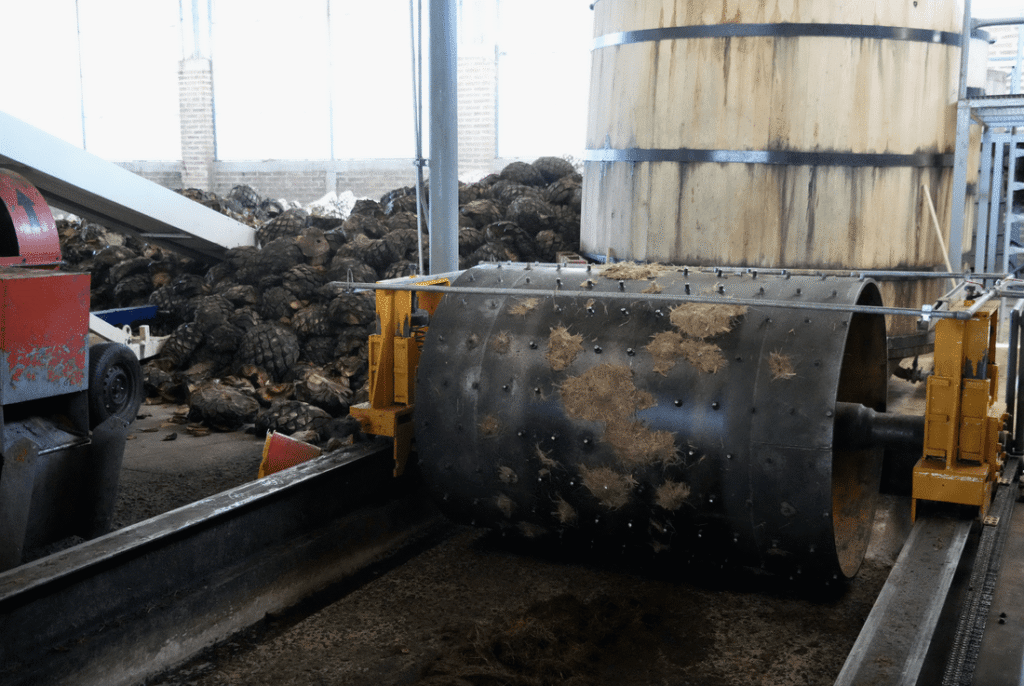
Water enters tequila production in several different ways. Distillers may use it to heat and process blue Weber agave, extract sugars, prepare fermentation, clean equipment and adjust the distilled spirit to its final bottling strength. The source can matter, but so do water treatment, composition, and the stage at which it is used.
That distinction is easy to miss. A producer may describe mountain spring water, a deep well or collected rainwater. That label alone cannot tell you whether the finished tequila will taste softer, sweeter or more mineral. To understand why water matters, follow it through the process rather than relying on a single romantic origin story.
Key Takeaway: Water matters at more than one stage of tequila making, but the source label is only part of the story. Ask where the water enters the process, how it is treated and tested, and whether the producer can explain its role in extraction, fermentation and final proofing. Those answers are more useful than assuming spring water automatically makes better tequila.
How does water source affect tequila production and flavor?
A tequila water source determines the starting composition of water available to the distillery. Well water, spring water and captured rainwater can differ in mineral content, hardness and other characteristics, but two wells—or two springs—need not be alike. Distillers can also filter, treat, blend or otherwise condition that water before using it.
Water can influence how production proceeds, especially when it is mixed with extracted agave sugars before fermentation or with the spirit after distillation. Yet a difference in finished flavor cannot be assigned to the source alone. Agave maturity, cooking, extraction, yeast, fermentation, distillation and other choices also shape what reaches the glass.
| Water source | What it tells you | What it does not prove |
|---|---|---|
| Deep well | Water is drawn from an underground source; chemistry depends on the aquifer and site | That every resulting tequila will taste more mineral or full-bodied |
| Spring | Water emerges from a naturally flowing source; chemistry still varies | That the spirit will automatically feel softer or smoother |
| Collected rainwater | A producer gathers and stores precipitation for use in production | That the water requires no treatment or will make tequila taste lighter |
These are descriptions of origin, not quality grades. The same source can be useful in one operation and need additional treatment for another. Producers who can explain what they actually measure and do with the water offer more information than producers who rely on vague adjectives.
Why water chemistry and treatment matter more than a source label
Water hardness generally refers to dissolved calcium and magnesium. Other minerals, acidity, dissolved solids and microbial quality also help define water’s condition. A careful distiller considers the needs of each production stage rather than simply advertising where the water came from.
For fermentation, water quality is part of the environment in which yeast converts available sugars into alcohol and other compounds. Some chemical characteristics may affect fermentation performance, but they act alongside sugar concentration, nutrients, temperature, yeast strain and time. It is not sound to attribute a specific finished aroma to an unnamed mineral without evidence.
Distillation complicates the picture further. Most ordinary dissolved mineral salts are not volatile in the way ethanol and many aroma compounds are; much of that mineral content stays behind rather than traveling unchanged through a well-operated still. Water added after distillation is a different case because it enters the finished spirit directly. This is why the phrase “mineral-rich water” needs context: at what stage was it used?
A distillery also has to consider cleanliness and consistency. Water that seems clear can still require filtration, sanitation or testing. The useful production question is not whether the source sounds pure, but whether its properties are understood and managed.
Where is water used during the tequila-making process?
Water may be used in cooking, extraction, fermentation, distillery utilities and proofing. The details vary among producers: some equipment uses steam or added water differently, and not every facility follows one identical sequence. The table below follows the process from agave to bottle.
| Stage | How water may be involved | Why the decision matters |
|---|---|---|
| Cooking agave | Steam and moisture help transfer heat to agave piñas | Cooking conditions affect preparation of agave carbohydrates before extraction |
| Crushing or extraction | Water may help recover soluble sugars from cooked agave or be part of other extraction arrangements | More recovery is not by itself proof of better sensory quality |
| Fermentation | Water may be used to adjust the fermentable liquid and create workable conditions for yeast | Sugar concentration and water chemistry interact with yeast, nutrients and temperature |
| Distillation | Water is part of the fermented liquid and can support heating and cooling equipment | Separation conditions and cut decisions matter more than a source label alone |
| Proofing and bottling | Suitable water may lower distillate strength to the intended commercial alcohol content | This water goes into the final drink and requires particular control |
| Cleaning and utilities | Water washes, cools and supports sanitary operations | Careful treatment and wastewater management matter for safety and resources |
For background on the starting plant, see DOC Agave’s guide to blue Weber agave. It explains why the quality of the raw material is a separate question from the water used after the piñas arrive at the distillery.
Water and agave extraction are not the same thing as dilution
The traditional route often begins with cooked agave, followed by crushing or milling to release its sweet juice, commonly called mosto before fermentation. Some systems use water in washing or sugar recovery. Other industrial approaches, including diffuser extraction and traditional milling, raise different questions about where water is introduced and how sugars are recovered.
Water used to help extract sugars from agave is not the same decision as water added to a distilled spirit before bottling. One affects the material delivered to fermentation; the other adjusts the strength and composition of an already distilled product. Treating both simply as “diluting tequila” makes the process harder to understand.
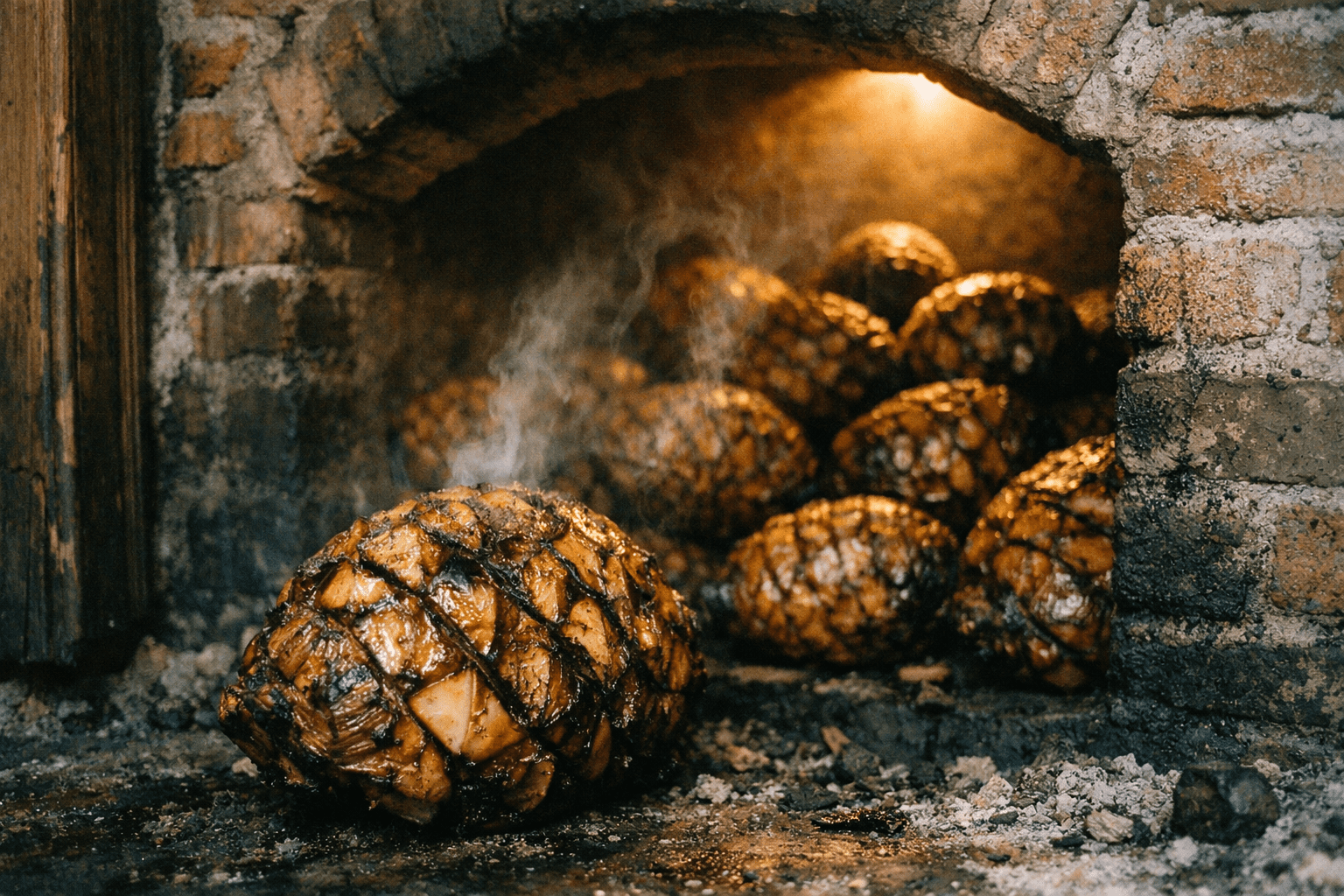
The cooking image shows moist, heated agave, but it cannot tell us the composition of the water or the distillery’s treatment protocol. That information must come from the producer rather than a photo.
Why does distillation and bottling water matter?
Distillation separates and concentrates components from a fermented agave liquid through controlled heating, vapor collection and condensation. Water is present in the fermented liquid, while cooling water or other utilities may also support the equipment. The actual still design and operating decisions vary across distilleries.
After distillation, some tequila is adjusted to its intended bottling strength with suitable water. Mexico’s official NOM-006-SCFI-2012 tequila standard addresses the use of potable, distilled or demineralized water for adjusting alcoholic strength. This is different from saying that any untreated spring or well water may simply be poured into the final spirit.
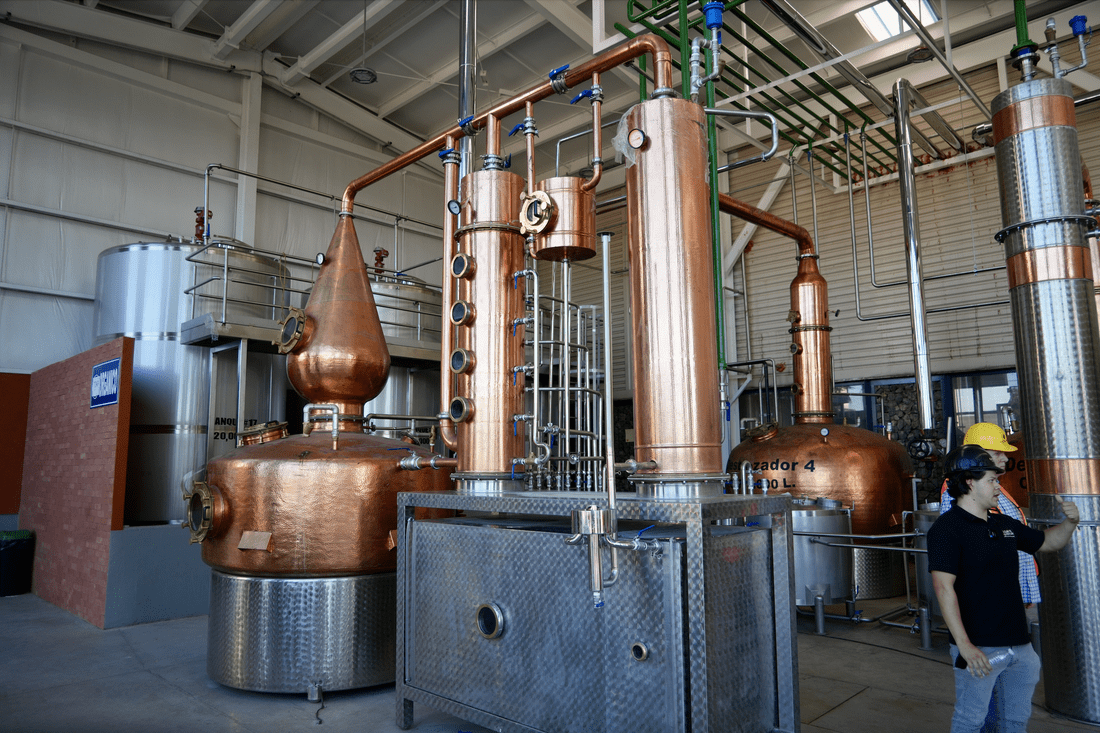
The copper stills show the equipment, not a test of a finished brand’s water composition. Because proofing water is added after distillation, its quality deserves careful attention. But even here, claims about a specific mouthfeel or flavor require more than a compelling origin story.
What Felipe Camarena’s G4 example actually shows
Water is not merely an abstract technical question. At El Pandillo, producer Felipe Camarena has described deliberate attention to sources used in making G4 tequila. The producer’s own G4 story discusses captured rainwater and spring water from the surrounding area. That gives readers a concrete example of a distiller considering water supply as part of production design.
The International Tequila Academy’s G4 production lesson also describes how water figures into that producer’s extraction process and provides a blend for the production method it discusses. Such descriptions are useful evidence for a particular operation, not an instruction to assume every G4 expression, batch or production year uses one permanent ratio.
Marcus Guiliano’s Tequila Masterclass manuscript likewise emphasizes that water sourcing deserves attention. Its discussion of various Felipe Camarena expressions is a starting point for questions, but not a substitute for checking the producer’s current specifications. The source contains inconsistent naming and blend examples, so this article does not repeat those as settled facts.
The lesson is practical: named practices, identifiable sources and process explanations are more informative than broad marketing language. None of them, on their own, prove that one tequila will be superior to another in a blind tasting.
Questions worth asking a tequila producer about water
You do not need a chemistry degree to have a useful conversation about water quality in tequila. Ask clear questions that connect the source to a production decision. A producer may not publish every measurement, but a thoughtful explanation is still more meaningful than an unexplained claim of purity.
- Where does the process water come from: a well, spring, collected rainwater or another source?
- Which stages use that water, and is the same supply used for extraction, fermentation and proofing?
- Is the water filtered, treated or tested before use? What properties are checked?
- Does the producer blend different sources, and does that practice vary by expression or production period?
- How does the distillery keep water quality consistent when conditions change?
- What happens to water used for cleaning and processing after the production cycle?
Those questions also separate the subject of this article from environmental stewardship. A producer can have carefully selected proofing water and still face serious challenges involving water consumption or wastewater. Sourcing quality and resource management are related, but they are not interchangeable claims.
Does the kind of water guarantee better tequila?
No. A named spring, deep well or rainwater collection system does not guarantee higher quality tequila. It tells you something about a distillery’s inputs and its priorities. What matters is how that water is handled alongside the agave, cooking, sugar extraction, fermentation and distillation.
The finished spirit should be evaluated on its actual balance, character and transparency rather than on one isolated production detail. DOC Agave’s tequila tasting guide offers vocabulary for describing what you experience. But taste alone cannot reliably reveal the source of every production input or prove which water blend a brand uses.
For a fair comparison, ask producers for traceable production information, then assess the whole tequila. A carefully managed modern system can deserve respect, and a romantic-sounding traditional source still deserves verification. Neither should be excused from scrutiny.
The better question is how a distiller uses the water
The role of water in tequila production is wider than the liquid poured into a bottle. It can support cooking, help recover fermentable sugars, affect the fermentation environment, run essential distillery equipment and adjust final alcoholic strength. Each role has a different purpose, and the best explanation makes those distinctions clear.
When someone highlights their special water source, ask which stages it serves and what they do to keep it suitable. That question is more specific, more respectful of the people making tequila and more useful than treating “spring,” “well” or “rainwater” as a flavor guarantee.