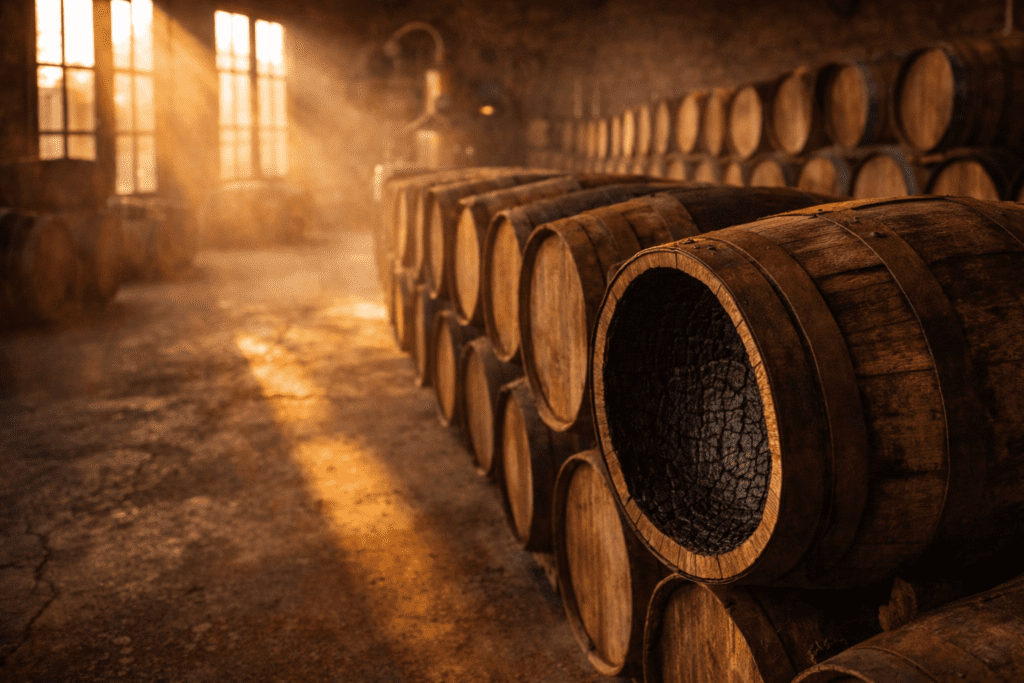
Walk into most liquor stores and you’ll see shelves packed with “premium” aged tequila. Extra añejo. Three years in oak. Luxury packaging. Premium price tags.
Here’s what they don’t tell you about the tequila aging process: most aged tequila tastes like bourbon with agave flavoring. The barrel isn’t enhancing the spirit. It’s masking poor-quality agave and shortcuts.
I’m Edwin Dolgopyat, CEO of Cazcanes Tequila. I’ve spent years selecting barrels, monitoring aging cycles, and tasting hundreds of samples. One truth became clear: the barrel should whisper, not shout.
Barrel aging is a craft decision. It requires understanding wood chemistry, proof management, and time. When done right, oak adds complexity and polish. When done wrong, it buries the agave character that makes tequila worth drinking.
This guide explains how we approach barrel aging at Cazcanes. You’ll learn which barrels work best. You’ll see why char level matters more than you think. You’ll discover when aging covers up problems instead of solving them.
By the end, you’ll understand the tequila aging process from a producer’s perspective. Not from a marketing department.
The Fundamental Difference: Tequila Ages in the Field First
Tequila is not whiskey. That might sound obvious, but understanding this distinction changes everything about how you evaluate aged tequila.
Whiskey starts as grain mash. It’s colorless and neutral when it comes off the still. The barrel creates the flavor. Without wood aging, whiskey has no character.
Tequila is the opposite. The blue weber agave plant matures for seven to ten years in the field before harvest. It absorbs minerals from volcanic soil. It develops complex sugars through photosynthesis. The raw material already has depth and character before we ever cook, ferment, or distill it.
Barrel aging in tequila is secondary refinement. It should add polish, not personality.
When I walk our agave fields at Cazcanes, I see plants growing for nearly a decade. They’ve survived droughts. They absorbed nutrients. They built sugar density that defines the spirit. That’s the primary aging. The wood comes later.
This is why craft producers obsess over agave sourcing. If the raw material is weak, no barrel aging will save it. Harvested too young? Farmed with shortcuts? Processed without care? You’ll end up with oak-flavored vodka.
The best blancos I’ve tasted need zero aging. They’re complex and balanced straight from the still. Aging should enhance that foundation, not replace it.
Understanding this principle separates craft tequila from industrial product. If a brand leads with barrel age instead of agave quality, that’s your first red flag.
For more context on how agave maturation shapes tequila character, see our comprehensive guide on blue weber agave cultivation.
Bourbon, Wine, and Cognac Casks: How Each Barrel Influences Tequila
Once you have quality agave distillate, barrel selection becomes critical. Not all wood is created equal. The type of barrel you choose determines flavor trajectory, aging speed, and final complexity.
At Cazcanes, we work with three primary barrel types. Each brings different characteristics to the spirit.
American Oak Ex-Bourbon Barrels: These are the workhorses of tequila aging. Ex-bourbon barrels are American white oak casks that previously held bourbon whiskey for at least two years. U.S. law requires bourbon to use new charred oak, so these barrels become available after their first use.
Flavor: Vanilla, caramel, toasted coconut, baking spice. The char layer caramelizes agave sugars and adds sweetness without heaviness.
Why we use them: They’re predictable. We know how these barrels behave over time. They integrate smoothly with agave’s natural flavor. Most reposado and añejo expressions use ex-bourbon barrels as the foundation.
The catch: Quality varies. Barrels from Kentucky cooperages cost more but deliver cleaner flavor. Lower-quality barrels can impart rough tannins or off-notes from poor bourbon residue.
American oak is more porous than French oak. It allows quicker oxygen exchange, which speeds up aging. That’s why reposado (2-12 months) can develop noticeable complexity in ex-bourbon casks.
French Oak Wine Barrels: French oak casks previously held wine—typically red Bordeaux, Burgundy, or Napa Cabernet. These barrels are expensive. A single French oak barrel costs three to five times more than an ex-bourbon barrel.
Flavor: Dried fruit, subtle spice, tannin structure, floral lift. French oak adds elegance rather than intensity.
Why we use them: They’re ideal for expressions where we want complexity without sweetness. French oak tannins bind with agave compounds differently than American oak. The result is a drier, structured spirit that pairs well with food.
The catch: French oak is less forgiving. If the agave base isn’t pristine, French oak will expose flaws. These barrels require longer aging cycles to integrate fully—12 to 24 months minimum.
We reserve French oak for our limited releases. It’s not a volume play. It’s about creating something distinctive for tequila enthusiasts who appreciate subtlety.
Cognac Casks: These are rare in tequila production. Cognac casks are French oak barrels that previously held cognac—sometimes for decades. They’re the most expensive option and the hardest to source.
Flavor: Floral aromatics, honey, dried apricot, sweetness. Cognac casks add a polish that feels delicate.
Why we use them: For expressions where we showcase what’s possible. You combine great agave with great wood. These barrels create tequila that drinks like brandy—layered and elegant.
The catch: Availability is limited. Cognac houses don’t release many barrels. When they do, prices are high. We use cognac casks sparingly for special releases.
Each barrel type serves a purpose. The key is matching wood character to agave profile and aging duration. Understanding this relationship is central to the tequila aging process.
The science behind barrel aging involves complex chemical reactions between wood compounds and spirit. For technical details on oak barrel chemistry and flavor extraction, see research from the American Chemical Society on wood-spirit interactions. For more on how barrel types shape flavor, see The Definitive Guide to Tequila Aging Barrels – Part 1.
Why Char Level Matters More Than Barrel Type
Most tequila drinkers don’t know this: char level affects flavor more than barrel type.
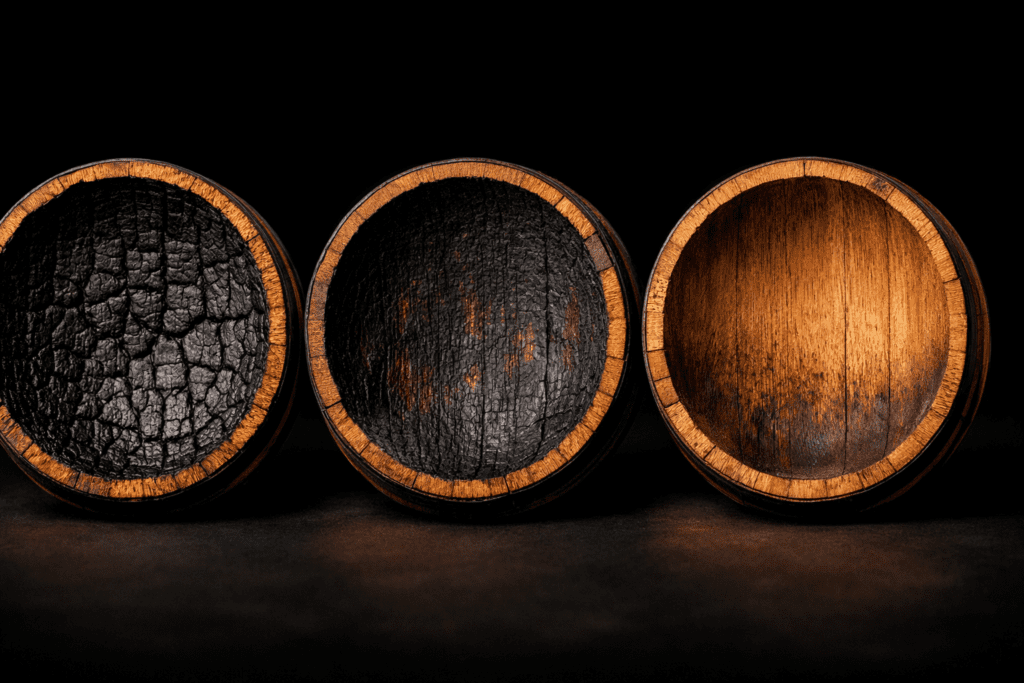
Coopers toast and char the interior wood when making barrels. This caramelizes wood sugars and opens up the oak’s cellular structure. The depth of char determines how actively the barrel imparts flavor.
Cooperages evaluate char on a scale from 1 to 4:
Char #1 (Light): Minimal carbonization. The wood is toasted but barely charred. This creates subtle integration with slow flavor development.
Char #2 (Medium-Light): Light char layer with some caramelization. Common in wine barrels. Offers gentle vanilla notes without intense oak.
Char #3 (Medium): The sweet spot for most tequila aging. Medium char balances vanilla, caramel, and spice without overpowering agave character.
Char #4 (Heavy): Deep “alligator skin” char pattern. Standard for bourbon barrels. Heavy char accelerates aging and creates oak flavor.
At Cazcanes, we prefer char #3 for most expressions. It strikes the right balance. We can age for 12-18 months and get complexity without the barrel taking over.
Heavy char (#4) is useful for reposado where we want noticeable wood influence in 6-9 months. But for añejo, heavy char becomes a concern. After 18+ months, the oak overwhelms and the agave disappears.
Light char (#1-2) requires patience. These barrels can take 24+ months to develop meaningful flavor. But the result is refined and elegant. We use light char for our extended-age expressions where time isn’t a constraint.
Here’s the mistake I see constantly: producers buy ex-bourbon barrels with heavy char because they’re cheap and widely available. Then they age tequila for 12-24 months in those barrels. The result tastes like bourbon with a hint of agave.
That’s not craft. That’s cost-cutting disguised as premium product.
If you’re evaluating aged tequila, ask about char level. Most brands won’t tell you because they don’t track it. That alone tells you everything about their quality standards.
The Tequila Aging Process Timeline: Reposado, Añejo, and Extra Añejo
Mexican law defines minimum aging requirements for each tequila category. But legal minimums and optimal aging are very different things.
Mexican law sets three categories:
Reposado: Aged 2 to 12 months in oak barrels. The name means “rested.” Wood influence should be present but not dominant.
Añejo: Aged 1 to 3 years in oak barrels not exceeding 600 liters. The name means “aged.” Oak character is clear but agave should remain identifiable.
Extra Añejo: Aged 3+ years in oak barrels. The premium category where producers showcase extended aging.
Reality vs. Regulation:
Just because you can age tequila for three years doesn’t mean you should. Wood extraction accelerates over time. After a certain point, you’re adding oak flavor without adding complexity.
Reposado: 6 to 9 months in medium-char ex-bourbon barrels works best. This gives you vanilla, light caramel, and gentle spice without burying the agave. Anything under 4 months feels incomplete. Anything over 10 months starts tasting more like whiskey.
Añejo: 18 to 24 months in balanced oak. This is where magic happens—deep integration between wood and agave. The spirit develops layered complexity. But push past 30 months and you risk losing agave character.
Extra Añejo: Most extra añejos are over-aged. After 36 months, the barrel overwhelms unless you’re using neutral or lightly-charred wood. I’ve tasted 5-year extra añejos that are undrinkable—pure oak tannin with zero agave expression.
At Cazcanes, we don’t chase age statements for marketing. We taste every barrel monthly. When the balance tips from “enhanced” to “masked,” we bottle. That might be 8 months for one batch and 22 months for another.
Entry proof matters: The alcohol percentage when tequila enters the barrel affects extraction speed.
High proof (55-60% ABV): Extracts flavor quickly. Intense. We use this for short reposado cycles where we want noticeable oak in 6-8 months.
Medium proof (48-52% ABV): Balanced extraction. This is our standard for añejo. It allows for 18-24 month aging without over-extraction.
Low proof (42-45% ABV): Slow, gentle extraction. Rare in tequila but useful for long aging. Lower proof reduces rough tannin extraction.
After aging, we proof down to bottling strength—typically 40% ABV for standard expressions and 45-50% ABV for premium releases.
Some producers age at low proof and bottle at high proof. This creates the illusion of “stronger” flavor. It’s a shortcut. Real depth comes from time and proper proof management during aging.
Understanding how tequila aging process variables interact—time, char, proof, barrel type—separates craft from industrial product.
For more on how time in barrel transforms tequila, see Highlands vs Lowlands Tequila to understand how terroir interacts with aging.
How Mass Producers Fake Barrel Aging
Not all aged tequila is actually aged. Some of it is manufactured flavor designed to mimic the appearance of craft without the cost or time investment.
Mexican law allows producers to add up to 1% additives by volume without disclosure. That includes oak extract, glycerin, caramel coloring, and sweeteners. For aged tequila, this loophole gets abused constantly.
Oak extract: Concentrated wood flavor in liquid form. Chemical suppliers sell it for spirits production. Add a few milliliters per liter and you get instant “aged” character without using barrels.
I’ve tasted oak-extract tequilas. They have a flat, one-dimensional wood flavor. No complexity. No integration. Just chemical vanilla layered over neutral spirit.
The tell: oak-extract tequilas smell like vanilla extract instead of caramelized wood. They taste sweet and artificial on the finish.
Micro-oxygenation: Some industrial producers use systems that inject oxygen into steel tanks with tequila and oak chips. This simulates barrel aging in weeks instead of months.
It’s not illegal. It’s efficient. But it doesn’t create the same chemical complexity as traditional barrel aging. Oxygen exposure in a tank is uniform. Oxygen exposure in a barrel is gradual and varies by location in the warehouse.
The result is rushed flavor—noticeable oak but no depth.
Over-aging to hide flaws: The most common trick is aging mediocre agave for 3-5 years. The oak overwhelms everything. Market it as premium. Charge $200+ per bottle.
If you can’t taste agave in an extra añejo, that’s not craftsmanship. That’s camouflage.
I’ve walked through facilities where this is explicit strategy. They use diffuser-extracted agave or young agave, then bury it in wood for years. The barrel isn’t enhancing quality. It’s hiding the lack of quality.
How to Spot Fake Aging:
- Check for additive-free verification on Tequila Matchmaker
- Smell for artificial vanilla or overly sweet notes
- Taste for flat, one-dimensional wood flavor
- Look for transparency about production methods
Craft producers share cooperage sources, barrel types, and aging protocols. If a brand won’t share that information, assume they’re hiding something.
For more on production transparency, see How to Read a Tequila Label: Understanding NOM Numbers.
Tasting Framework: Is the Barrel Enhancing or Masking?
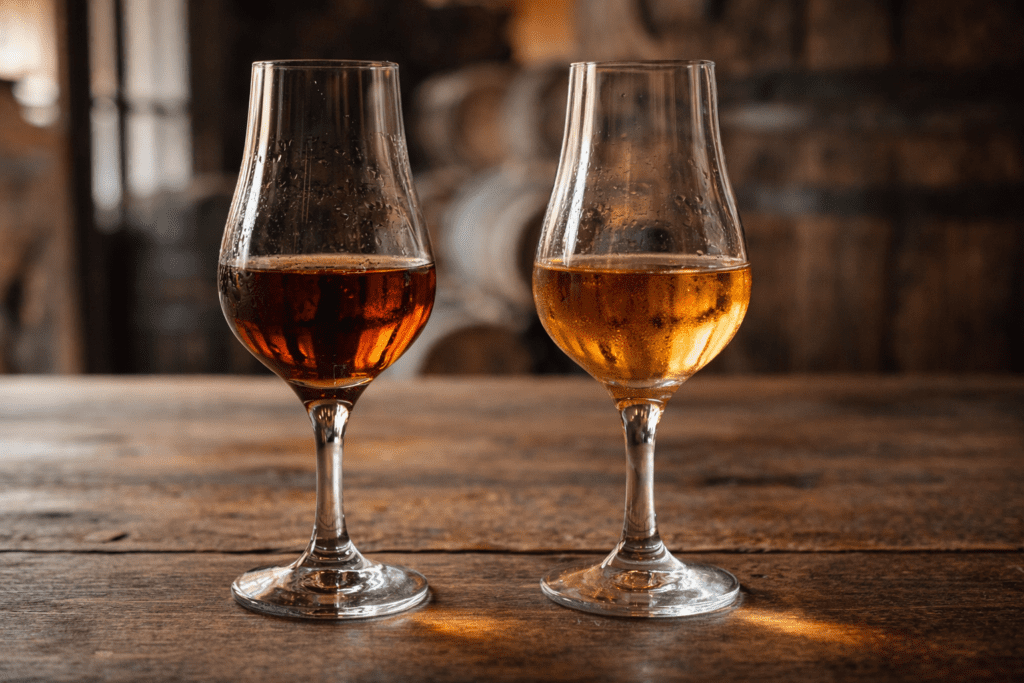
When you taste aged tequila, you need a framework for evaluation. You’re not just looking for “good” or “bad.” You’re asking: is the barrel working with the agave or against it?
Here’s the three-step tasting protocol I use for quality control at Cazcanes.
Step 1 – The Nose: Pour an ounce into a proper glass—Glencairn whisky glass or champagne flute. No shot glasses. Put your nose just above the rim and inhale gently with your mouth slightly open.
Can you smell cooked agave under the oak?
In a well-aged tequila, you should detect roasted agave, baked pineapple, or caramelized vegetable notes alongside the wood. If all you smell is vanilla and charred oak, that’s a red flag.
Highlands agave + oak: Look for citrus, floral notes, and fruit layered with vanilla and spice.
Lowlands agave + oak: Look for black pepper, herbs, and mineral notes alongside toasted caramel.
If the nose is pure wood with zero agave character, the barrel is masking, not enhancing.
Step 2 – The Mid-Palate: Take a small sip and let it sit on your tongue for 3-5 seconds. “Chew” it slightly to coat your palate.
Does wood complement or overwhelm?
In craft-aged tequila, wood and agave should feel integrated. You taste them together, not separately. The oak adds structure and sweetness, but agave remains the foundation.
In poorly-aged tequila, oak sits on top like a separate layer. It feels disconnected. The agave is there somewhere underneath, but the wood is doing all the talking.
Texture matters: Well-aged tequila has silky, round texture from gradual oxidation and wood tannins. Over-aged tequila has dry, astringent texture from heavy tannin extraction.
Step 3 – The Finish: Swallow and breathe out through your nose. Wait 10-15 seconds.
Does agave character return on the finish?
In high-quality aged tequila, the finish should circle back to cooked agave. You might taste oak at first, but agave should reappear. Either as sweet baked notes or savory earth, depending on terroir.
If the finish is pure wood with bitter tannin and zero agave, you’re drinking expensive oak juice.
Length matters: Craft tequila has a long, evolving finish. Industrial tequila has a short, flat finish because there’s no complexity to unfold.
Example – French Oak Reposado: Take a French oak reposado aged 9 months at medium char. Here’s what you should experience:
Nose: Agave sweetness with dried apricot, subtle spice, light floral lift
Palate: Balanced wood tannin that adds structure without dryness, agave remains clear
Finish: Long, clean, with agave returning after the oak wave
If that same tequila shows heavy vanilla, too much sweetness, or zero agave on the finish, something went wrong in production or barrel selection.
Use this framework every time you evaluate aged tequila. It trains your palate to separate craft from shortcuts.
For more on professional tasting techniques, see the DOC Agave tequila tasting guide.
Inside Cazcanes: How We Choose and Manage Barrels
At Cazcanes, barrel selection isn’t outsourced to suppliers. I personally inspect every barrel that enters our warehouse. This is how we do it.
Cooperage partnerships: We work with two cooperages. One in Kentucky for ex-bourbon barrels. One in France for wine casks. Both have decades of experience supplying spirits producers.
Before we commit to a barrel order, I visit the cooperage. I inspect wood sourcing, drying protocols, and char consistency. I taste samples from test barrels they’ve prepared.
Quality cooperages follow strict industry standards for wood selection, seasoning, and construction. The Independent Stave Company, one of the world’s leading cooperages, publishes detailed specifications that set benchmarks for premium barrel production.
This isn’t standard practice in tequila. Most producers buy barrels sight-unseen based on price. We treat barrels like we treat agave—as raw materials that define quality.
Barrel inspection: When a shipment arrives, we inspect every barrel. Here’s what we check:
Interior char: We shine a flashlight inside and look for even char coverage. Uneven char creates hot spots that over-extract in some areas while under-extracting in others.
Aroma: Ex-bourbon barrels should smell like caramel and vanilla, not spoiled bourbon. Wine barrels should smell like fruit and oak, not vinegar or mold.
Structure: We check for leaks, cracks, and loose staves. A compromised barrel is worthless.
Previous use: We track what each barrel held before and how many fills it’s had. First-fill ex-bourbon barrels are most active. Third-fill barrels are nearly neutral.
If a barrel doesn’t meet standards, we reject it. We don’t try to save money by using poor wood.
Rotation and monitoring: Once we fill barrels, we don’t just let them sit. Aging is active management.
Every barrel is labeled with fill date, agave batch number, entry proof, and barrel history. We taste samples monthly to track flavor development.
Barrels in different warehouse locations age at different rates. Top racks get more heat exposure and age faster. Bottom racks stay cooler and age slower. We rotate barrels seasonally to maintain consistency across batches.
When a barrel reaches optimal balance—typically 18-22 months for our core añejo—we empty it right away. We don’t wait for a bottling schedule or push for a specific age statement. The tequila tells us when it’s ready.
This approach requires more care and attention than industrial aging. But it’s the only way to ensure the tequila aging process serves quality instead of marketing.
The Cazcanes añejo philosophy: Our añejo showcases what happens when you start with great agave, distill with care, and age with intention. The barrel should add complexity and polish. It should never bury the agave.
If you taste our añejo and think “this tastes like great tequila enhanced by wood,” we’ve succeeded. If you think “this tastes like bourbon made from agave,” we’ve failed.
That’s the standard. That’s the craft.
For more on industry production standards and transparency, see research from the Consejo Regulador del Tequila (CRT), Mexico’s official tequila regulatory body.
The Bottom Line: Barrel Aging as Craft, Not Marketing
The tequila aging process is not about hitting legal minimums or chasing age statements for luxury positioning. It’s about using wood as a tool to refine agave character, not replace it.
When you evaluate aged tequila, ask these questions. Whether you’re buying for your bar, sourcing for distribution, or just drinking for pleasure:
- Can I taste agave, or just oak?
- Does the wood feel integrated or layered on top?
- Does the finish return to agave character?
- Is the producer transparent about barrels, char, and aging protocol?
If a brand leads with “aged 5 years in luxury barrels” but won’t tell you where the agave came from or how they processed it, that’s a red flag.
Craft tequila starts in the field. Barrel aging is the final polish on a product that was already exceptional. Industrial tequila starts with cost optimization. Barrel aging is damage control disguised as luxury.
The difference is real. You can taste it. You can verify it. And once you know what to look for, you’ll never settle for oak-flavored mediocrity again.
At Cazcanes, we age tequila the way it should be aged—with patience, precision, and respect for the agave that took a decade to mature. The barrel whispers. The agave speaks.
That’s the craft. That’s the standard.
Want to go deeper? DOC Agave’s Tequila Masterclass Certification teaches you how to evaluate production methods. You’ll identify additives and use tools like Tequila Matchmaker to separate craft from marketing. Learn from industry professionals who’ve spent decades on production floors.
Because understanding barrel aging isn’t just about appreciating tequila. It’s about respecting the distillers who do it right.
— Edwin Dolgopyat, CEO of Cazcanes Tequila