
You’ve seen it happen a hundred times. Someone orders tequila, grabs the salt shaker, and braces for impact like they’re about to down cough syrup. That’s not tequila appreciation. That’s a party trick that masks what real tequila actually tastes like. And it’s exactly why most people have no idea that authentic tequila rivals fine wine or single malt whiskey in complexity.
If you’ve ever wanted to change that narrative, hosting a proper tequila tasting is one of the most powerful ways to do it. You can show your friends, colleagues, or clients what tequila really is. Not a drinking party. A tasting. An experience that educates, transforms, and creates advocates for craft tequila.
In this guide, you’ll learn exactly how to host a tequila tasting that goes beyond the shot glass. We’ll cover how to choose authentic bottles. How to structure the tasting flow. How to teach your guests what to look for. And how to create an experience they’ll remember.
What Makes a Great Tequila Tasting (Not Just a Drinking Party)
A tequila tasting is not a party where people get drunk on margaritas. It’s an educational experience with a clear structure, intention, and respect for the craft. The goal is transformation, not consumption.
At a great tasting, your guests will learn to identify the difference between additive-free tequila and mass-produced shortcuts. They’ll understand why terroir matters. They’ll taste agave-forward expressions and recognize the craftsmanship behind small-batch distillation. They’ll leave as advocates who know what to look for and won’t settle for celebrity bottles or diffuser-made spirits.
The difference between a party and a tasting comes down to three things:
Education is the foundation. You’re teaching the story of the jimadores, the distillers, and the production methods. You’re explaining why slow cooking in a traditional horno creates different flavors than a diffuser. You’re showing them how to use Tequila Matchmaker to verify authenticity.
Structure guides the experience. You’ll taste in a specific order—blanco, reposado, añejo—so guests can understand how aging and oak influence the spirit. You’ll use proper glassware, not shot glasses. You’ll pace the tasting so people can actually think about what they’re drinking.
Storytelling creates connection. The best tastings aren’t just technical. They’re personal. When you share the story of a small family-owned distillery in the highlands, you’re connecting people to the people behind the bottle. When you explain why NOM numbers matter, you create that same connection.
When you combine education, structure, and storytelling, you create advocates. That’s what learning how to host a tequila tasting is all about.
Planning Your Tequila Tasting: The Framework
Before you choose bottles or send invitations, you need a framework.
The sweet spot is 6 to 10 people. Small enough for everyone to participate. Large enough for diverse perspectives. If you go bigger than 12, discussion becomes harder.
Four to five expressions is ideal. Here’s the classic lineup:
- Blanco from the highlands (bright, floral, fruity)
- Blanco from the lowlands (earthy, herbal, mineral)
- Reposado (2-12 months in oak, balanced agave and wood)
- Añejo (1-3 years in oak, rich and complex)
- Optional: Extra Añejo (3+ years, for comparison to aged whiskey or cognac)
This progression teaches terroir, production methods, and aging impact.
Plan for 2 to 3 hours. That includes a welcome (15 minutes), the tasting (90 minutes), and discussion (30-45 minutes).
You don’t need expensive bottles. Authentic additive-free tequila starts around 40 to 60 dollars per bottle. For 4-5 bottles, budget 200 to 300 dollars total. Split among 8 guests, that’s 25 to 40 dollars per person.
Choosing the Right Bottles: Quality Over Hype
This is where most people fail. They grab celebrity bottles with flashy packaging or choose based on price alone. Neither approach works.
Here are the non-negotiables:
100% agave only. If the label doesn’t say “100% agave,” don’t buy it. Mixto tequilas are only 51% agave. The rest is filler.
Additive-free verification is critical. Most tequilas contain additives like glycerin, caramel coloring, oak extract, and vanilla flavoring. These mask the true flavor. Use Tequila Matchmaker to verify which brands are confirmed additive-free.
NOM numbers matter. Every bottle has a NOM number—the distillery registration number assigned by the CRT. It tells you where the tequila was actually made. For a deep dive, check out our guide on how to read tequila labels and NOM numbers.
Terroir creates distinct flavor profiles. Highlands tequila (Los Altos) is brighter, fruitier, and more floral. Lowlands tequila (El Valle) is earthier, more herbal, and mineral-driven. Include at least one highlands blanco and one lowlands blanco so guests can taste the difference side by side. Read our full breakdown of highlands vs. lowlands tequila.
Skip celebrity bottles. Most are made for profit, not quality. Choose small-batch, family-owned distilleries with transparent production practices.
Essential Supplies for How to Host a Tequila Tasting
You don’t need a fancy bar setup. But you do need the right tools.
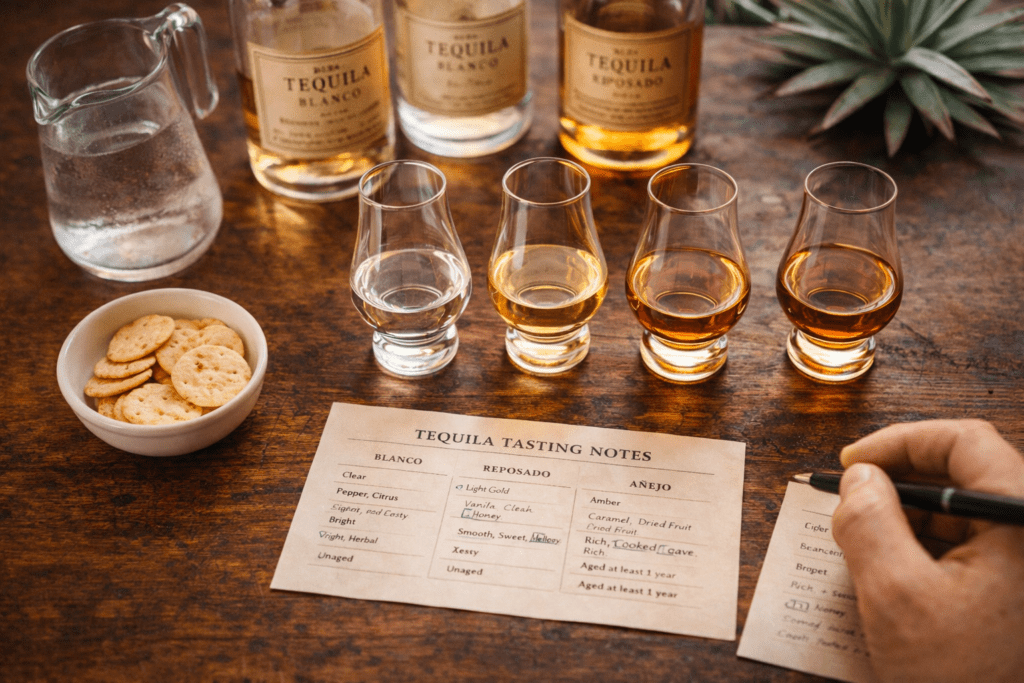
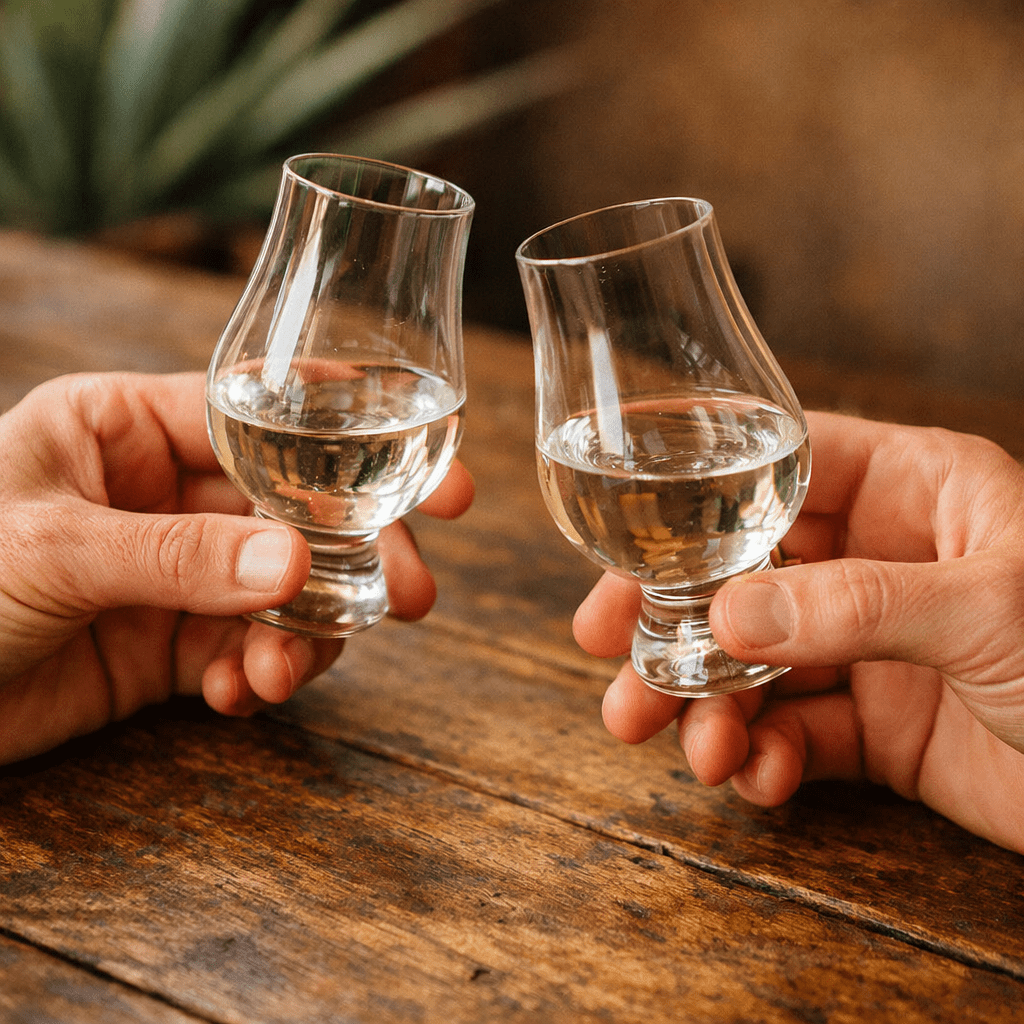
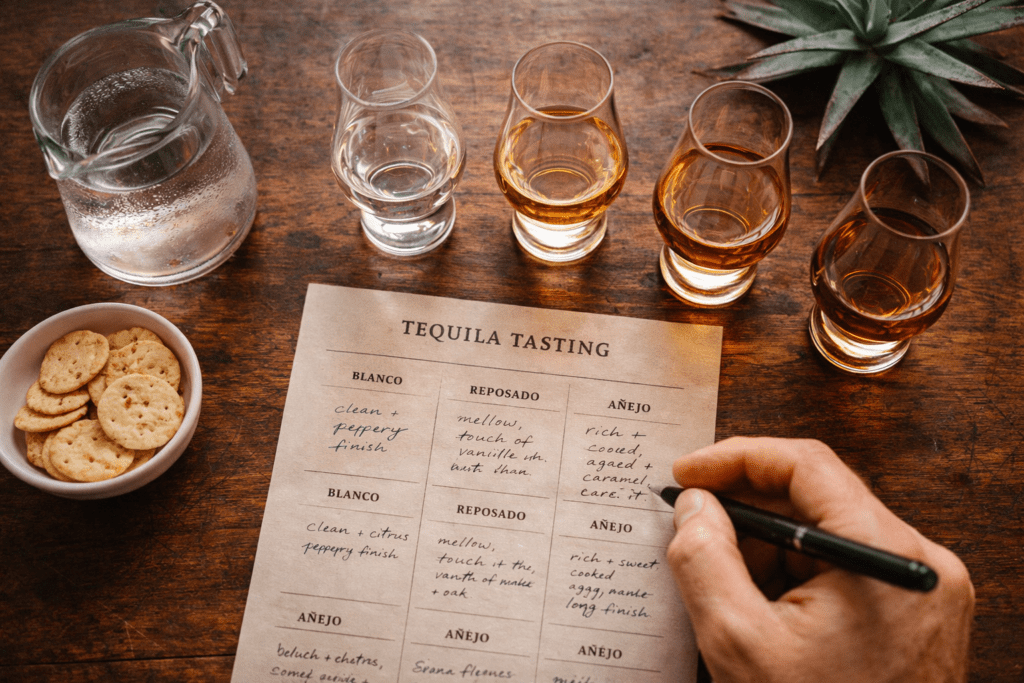
Use Glencairn glasses (tulip-shaped whiskey glasses) or white wine glasses. The shape concentrates the aromas. Plan for one glass per guest per expression. Pour 0.5 to 0.75 ounces per expression—roughly 15-20ml.
Provide room-temperature still water for palate cleansing. Avoid sparkling water. Plain water crackers or unsalted tortilla chips work well.
Print simple tasting note templates with sections for appearance, aroma, palate, and overall impressions.
Optional: Offer light food pairings after the tasting. Dark chocolate (70%+ cacao), aged cheeses (manchego, aged gouda), fresh fruit (mango, papaya, citrus), or simple Mexican snacks. Avoid heavy, spicy, or acidic foods.
How to Host a Tequila Tasting: Structure and Flow
The structure determines whether people learn or just drink.
Start by welcoming guests and setting the tone. Explain this is an educational tasting, not a party. Introduce the bottles. Show the labels, point out NOM numbers, mention distilleries and regions.
Taste from lightest to heaviest. Start with blanco (unaged), move to reposado (lightly aged), finish with añejo (heavily aged). Within blanco, taste highlands before lowlands.
For each expression, follow this ritual:
See: Hold the glass up to the light. Note the color. Swirl and watch the viscosity.
Swirl: Gently swirl to release aromatics. Most of what we sense as flavor is aroma.
Smell: Bring the glass to your nose and inhale gently. Hold it a few inches away. What do you smell?
Sip: Take a small sip and let it coat your mouth. Let the tequila sit on your tongue for 3-5 seconds. Then swallow and focus on the finish.
Check out our complete tequila tasting guide.
After each tasting, open the floor for discussion. Ask: What did you notice first? How does this compare? What flavors are you picking up?
Guide, don’t lecture. Validate responses. Offer suggestions if someone struggles.
Spend 15-20 minutes on each expression. Don’t rush. Provide water and palate cleansers between tastings.
Teaching Guests What to Look For
Help guests identify flavors by offering categories: agave-forward (cooked agave, earthy, vegetal, herbal), fruit notes (citrus, tropical fruit, stone fruit), spice notes (black pepper, cinnamon, clove), oak and aging notes (vanilla, caramel, toasted oak, chocolate), and floral notes (lavender, chamomile, mint).
When someone identifies a flavor, ask them to elaborate. “You said vanilla—where are you tasting that? The finish?” This builds confidence.
Teach terminology. Agave-forward means the cooked agave flavor dominates, rather than oak or additives. Herbal is fresh and green. Earthy is mineral and soil-driven.
Spot additives. Glycerin makes tequila feel thick. Caramel coloring darkens reposados and añejos beyond natural aging. Oak extract creates artificial vanilla notes. When you taste additive-free tequila, the flavors are clean and integrated.
Connect flavor to production. Was the agave cooked in a traditional stone oven (horno) or autoclave? Wild fermentation adds complexity. Copper stills create smoother spirits. When guests understand why they’re tasting certain flavors, the tequila becomes a story. Read our guide on aging tequila in barrels.
Don’t over-pour. Stick to 0.5-0.75 ounces per expression. Avoid celebrity bottles—they’re marketing, not craftsmanship. Choose small-batch, family-owned distilleries. Don’t skip the education. Tell the stories, explain production methods, show them how to read labels. Don’t ignore terroir and transparency. If you don’t explain why highlands tastes different from lowlands, guests miss the key lesson. Tequila is a product of place, people, and process.
Share the stories behind the bottles. Every bottle has a story. Who founded the distillery? How many generations has the family been making tequila? What makes their process different? When you share these stories, you create connection. Guests taste the work of jimadores who’ve harvested agave for 30 years. They taste the vision of master distillers who refuse to use diffusers.
Talk about jimadores—skilled agave harvesters who spend their lives in the fields. They know when an agave plant is ready (7-10 years of growth). They cut away spiky leaves with a coa to reveal the piña. Talk about distillers who wake at 4 AM to tend fermentation tanks. Who taste every batch. Who make decisions based on tradition, not profit.
These stories transform the tasting from technical to human. At the end, ask guests to share their favorite expression and why.
After the tasting, give resources to continue their education. Recommend books, documentaries, or courses. Point them to DOC Agave’s certification programs and masterclasses. Suggest they attend professional tastings or visit craft tequila bars. Send guests home with tools: Tequila Matchmaker (the best app for verifying additive-free tequila), CRT Database (official registry for NOM numbers), and DOC Agave (courses, certifications, and events). Create ongoing communities. Set up a group chat or email list for discoveries. Organize follow-up tastings focused on specific regions or production methods. When you build community, you multiply impact.
Conclusion
Hosting a tequila tasting party isn’t about impressing people with expensive bottles. It’s about education, transparency, and respect for the craft. When you combine practical logistics, structured tasting techniques, and authentic storytelling, you create an experience that transforms how people see tequila forever.
Your guests will leave knowing how to read a label. How to spot additives. How to taste terroir. How to choose quality over hype. They’ll leave as advocates who refuse to settle for mediocrity and who champion the artisans making real tequila. That’s the real power of knowing how to host a tequila tasting.
So gather your bottles, set up your glassware, and invite your people. The world needs more tequila advocates. And it starts with you.
Ready to take your tequila knowledge to the next level? Explore DOC Agave’s certification programs, masterclasses, and professional tasting events. Learn directly from experts with decades of field experience in Mexico’s tequila regions. Become the tequila advocate your community needs.