
You’ve heard the terms—Highlands vs Lowlands tequila—but do you actually know what they mean? More importantly, do you know when they don’t matter?
Walk into any liquor store or scroll through any tequila brand’s marketing. You’ll see these terms thrown around like quality stamps. “Our Highlands tequila is sweeter and more refined.” “Our Lowlands expression has that authentic, earthy character.”
But here’s what the industry doesn’t always tell you: regional differences only matter when production respects them. If the agave was harvested young, farmed with industrial shortcuts, or processed for efficiency over integrity, those distinctions disappear. You’re not tasting Highlands or Lowlands anymore—you’re tasting cost-cutting.
I’ve spent decades visiting tequila distilleries and tasting hundreds of expressions. I’ve learned directly from master distillers and agave farmers in both regions. Terroir in tequila is real, but it’s fragile. It only survives when every step honors the plant—from field to fermentation to distillation.
This piece will teach you what Highlands and Lowlands actually mean and how those differences show up in flavor. By the end, you’ll know how to taste the difference and spot the shortcuts.
What “Highlands” and “Lowlands” Actually Mean (The Geography Lesson You Need)
The terms “Highlands” and “Lowlands” refer to two distinct agricultural zones within the state of Jalisco, the heart of tequila production.
Here’s the first thing you need to understand: Region refers to where the agave was grown, not where the tequila was distilled. A distillery in the town of Tequila (Lowlands) can truck in agave from the Highlands. The opposite is also true. But since the blue weber agave plant takes 6 to 8 years to mature, the soil and climate where it spent those years matter a lot.
Highlands Tequila (Los Altos de Jalisco)
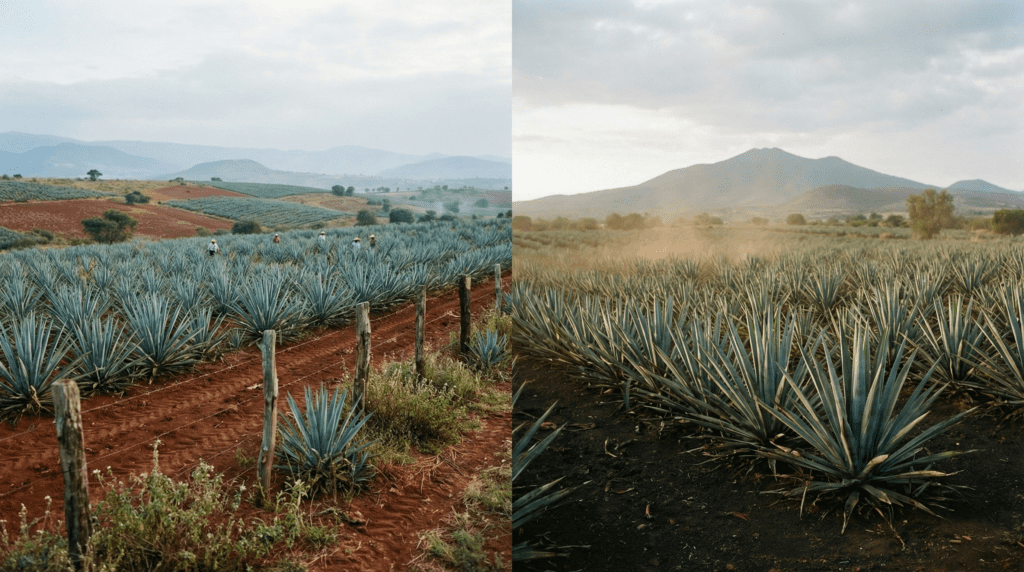
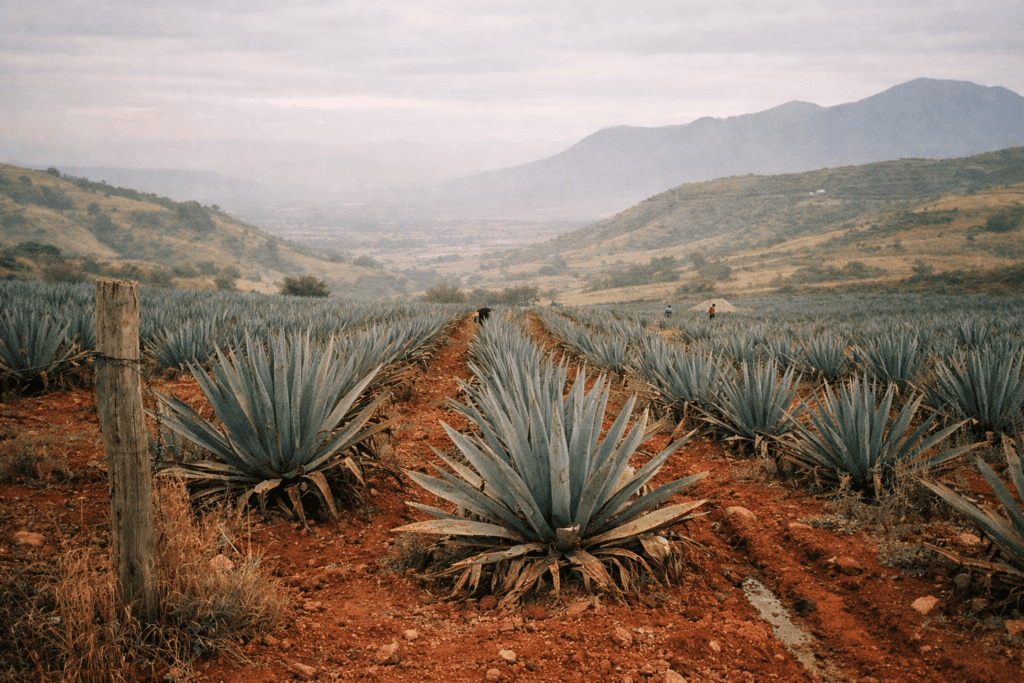
When we talk about the Highlands, we’re talking about Los Altos de Jalisco. This region sits at a significantly higher elevation. It ranges between 1,800 and 2,200 meters (about 6,000–7,200 feet) above sea level.
The standout feature here is the soil. It’s a striking, iron-rich volcanic red clay that’s mineral-dense with good drainage.
The climate is distinct. Because of the altitude, the region experiences cooler nights and wider temperature swings. This stresses the plant, forcing it to work harder and develop different chemical compounds inside the piña (the heart of the agave).
Major towns here include Arandas, Atotonilco El Alto, and Jesús María. If you see a bottle boasting “Los Altos” origin, it’s claiming this specific high-altitude pedigree.
Lowlands Tequila (Tequila Valley)
The term “Lowlands” is a bit of a misnomer. At 1,200 to 1,600 meters (4,000–5,200 feet), it’s still high altitude by global standards. It’s just lower than Los Altos. This region is properly known as the Tequila Valley (El Valle). It surrounds the town of Tequila itself and sits at the base of the Tequila Volcano.
Here, the soil changes to darker “black earth” with higher clay content that retains moisture longer. The climate is warmer and more consistent without drastic nightly temperature drops.
Major towns include Tequila, Amatitán, and El Arenal. This is where the spirit was born. The old-school industry giants established their roots here.
How Blue Weber Agave Behaves in Each Region
Geography isn’t just about scenery; it dictates biology. The blue weber agave is a product of its environment. The differences in soil and climate between these two regions force the plant to behave differently as it matures.
Highlands Agave: Sugar Density and Aromatic Potential
In the Highlands, the struggle creates the character. The iron-rich red soil and cooler nights create functional stress that forces the agave to grow larger and concentrate higher sugar levels in its piña.
Because of the cooler average temperatures, the maturation cycle can be slightly longer. It’s often 7 to 9 years. This slower growth allows for the development of more complex aromatic compounds. Think fruity and floral notes. Think of it like a wine grape grown in a cooler climate. It retains acidity and develops lifted aromatics rather than becoming a sugar bomb.
Lowlands Agave: Herbal Intensity and Mineral Structure
In the Tequila Valley, life is easier for the plant, but the result is earthier. The “black earth” retains moisture better, so the agave doesn’t face the same stress. The warmer temperatures create a profile that leans toward herbal, vegetal, and spicy notes.
The agave here often develops a savory, “masculine” profile. Think black pepper, wet stone, and fresh herbs. The plant absorbs the character of that volcanic valley soil. It grounds the flavor rather than lifting it.
The Industrial Farming Trap (Where Terroir Dies First)
Here is where the first “pattern vs. rule” caveat comes in. Regional tendencies only emerge when the agave is allowed to grow naturally and fully mature.
Industrial farming practices can erase regional character before the plant even leaves the field. If a grower over-fertilizes and over-irrigates, they pump up the agave’s weight too quickly. Aiming for a 3-4 year harvest instead of 6-8 years creates a “bloated” piña. It might look big, but it’s watered down. It’s low in sugar and lacks the chemical complexity that creates flavor.
A bloated, immature agave from the Highlands won’t taste fruity and floral. It will taste flat and vague. A rushed agave from the Lowlands won’t have that deep mineral complexity. It will just taste raw and green. Terroir requires patience. If the farming is industrial, the region is irrelevant.
Highlands vs Lowlands Tequila Flavor Profiles
If you have a mature agave, grown responsibly, and produced without shortcuts, what does highlands vs lowlands tequila actually taste like?
First, a critical caveat: These are tendencies, not absolutes. Even within regions, micro-climates exist. One hillside might get more sun than another. Plus, every master distiller has their own “hand.” Fermentation yeast strains, distillation cut points, and proofing choices all shape the final profile. Think of these descriptions as “patterns,” not rigid rules.
What Highlands Tequila Tastes Like
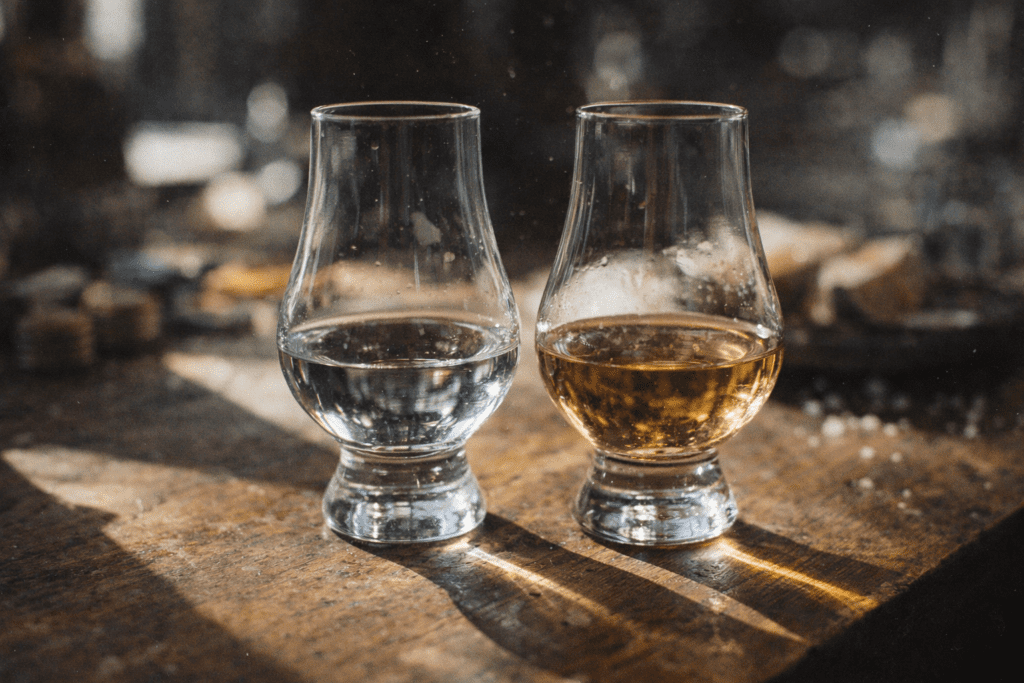
When you pour a well-made blanco from Los Altos, expect a profile that feels “lifted.”
- Aromas: Often floral and fruity. Look for citrus blossom, orange peel, pear, and cooked apple. Sometimes you’ll get tropical notes like pineapple.
- Palate: Generally sweeter and rounder. The high sugar content of the agave often translates into a bright, fruit-forward flavor.
- Finish: Clean, airy, and often lingers with floral or sweet spice notes.
- The Vibe: Bright, elegant, and “high frequency.”
What Lowlands Tequila Tastes Like
A well-made blanco from the Tequila Valley tends to feel more “grounded.”
- Aromas: Earthier and more intense. Expect clear notes of cooked agave fiber, black pepper, and fresh herbs (mint, rosemary). You’ll also find wet stone and sometimes a brine or olive note.
- Palate: Often has a drier, more savory structure. It feels substantial and bold on the tongue. It has a firm agave backbone.
- Finish: Long-lasting and spicy, with a pleasant mineral grip.
- The Vibe: Bold, savory, and “bass heavy.”
The “Unless” Factor
Read those descriptions again. Now, realize that none of that matters if the producer used certain shortcuts. Diffusers, aggressive autoclave cooking, or additives erase regional character.
If a distillery chemically extracts sugar from raw agave (diffuser), they strip away delicate compounds. If they cook it so fast it burns (aggressive autoclave), the same thing happens. You won’t taste “Highlands fruit” or “Lowlands pepper.” You’ll taste flat, generic alcohol. Or worse, you’ll taste the fake vanilla and glycerin additives they dumped in to cover up the lack of flavor.
Terroir is fragile. Industrial processing is a bulldozer. Learn more about diffuser tequila vs traditional methods to understand these production shortcuts.
When Regional Differences Don’t Matter (The Production Reality Check)
This is the most important part of this entire article. Region only matters if the production method allows it to matter.
Take an agave plant from the Highlands, rich with complex sugars and floral precursors. Run it through an industrial diffuser, and you obliterate its identity.
Production Methods That Erase Terroir
1. Diffusers (The “Chemical Shortcut”)
A diffuser is essentially a giant machine that reverses the traditional tequila making process. Instead of cooking the agave to convert starches into sugars, a diffuser shreds raw agave. It blasts it with hot water and acids to extract the starches. The conversion happens later via chemical hydrolysis. This uses hydrochloric or sulfuric acid.
The result: This strips away the natural agave character. You aren’t tasting the soil or the climate. You’re tasting a chemically efficient neutral spirit that has to be “fixed” later.
2. Aggressive Autoclaves
Autoclaves (pressure cookers) can make great tequila. But when used aggressively to speed up production, they can burn or “over-caramelize” the agave. This creates a flat, one-note sweetness that masks any subtle regional notes.
3. Additives (The Mask)
Legally, producers can add up to 1% by volume of additives to aged tequila without disclosing it. These include glycerin, caramel color, oak extract, and syrup. Illegally, many do it to lighter expressions too. If a Lowlands tequila tastes like vanilla cake batter, that’s not the soil. That’s a lab-created additive covering up a lack of quality.
How to Check if Your Tequila is Additive-Free
You can’t rely on the bottle label—the law doesn’t require brands to list additives. To find real tequila, use independent verification resources.
1. Download the Tequila Matchmaker app or visit their website.
2. Search for your bottle.
3. Look for the “Additive-Free” verification badge.
If it’s not on the list, trust your palate: does it taste like agave, or does it taste like candy?
What to Look For in Authentic Tequila
If you want to taste the difference between Highlands and Lowlands, you need a bottle that respects the raw material. Look for:
- “Additive-Free” verification (via Tequila Matchmaker)
- Production transparency: Brands that share how they cook (brick ovens or gentle autoclave) and crush (tahona or roller mill) their agave
- Blanco expressions: Wood aging masks agave notes, so start with blanco to learn terroir
For specific recommendations, check out our best tequila for sipping gift guide featuring only additive-free blancos.
How to Taste Highlands vs Lowlands Tequila
Reading about flavor is one thing; experiencing it is another. If you want to train your palate to detect Highlands vs Lowlands tequila characteristics, you need a structured approach.
Here is the exact tasting framework I use when training staff or leading tastings. For a deeper dive into proper tasting techniques, see our complete tequila tasting guide.
The Setup
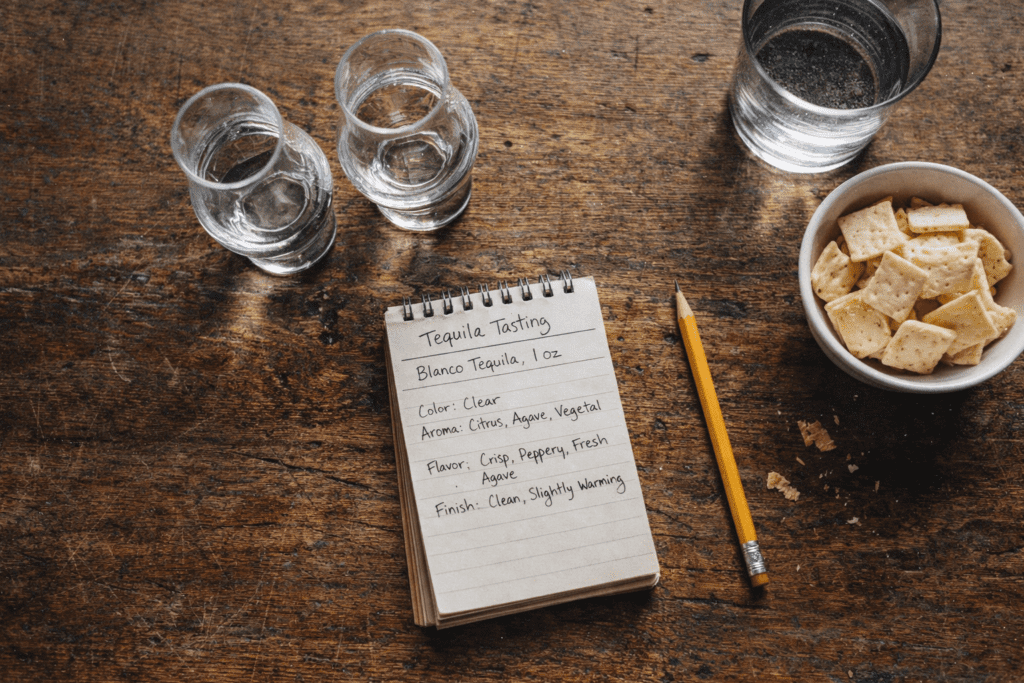
- Get two real blancos: One verified Highlands (e.g., Ocho, G4, El Tesoro) and one verified Lowlands (e.g., Fortaleza, Cascahuín, Arette). Ensure both are additive-free.
- Use proper glassware: Skip the shot glass. Use a Glencairn whisky glass or a champagne flute to trap the aromatics.
- Pour small: You only need an ounce of each.
The 3-Step Evaluation
Step 1: The Nose (Don’t Swirl Yet)
Put your nose just above the rim. Breathe gently with your mouth slightly open.
- Highlands Check: Are you getting sweet fruit, flowers, or citrus zest? Does it feel “lifted” and airy?
- Lowlands Check: Are you smelling wet earth, black pepper, mint, or olive? Does it feel “heavier” in the nose?
Step 2: The Mid-Palate (The Chew)
Take a small sip and let it sit on your tongue for 3-5 seconds. “Chew” it slightly.
- Highlands Check: Does it expand with sweetness? Do you taste cooked agave that reminds you of roasted yam or honey?
- Lowlands Check: Does it grip your tongue? Is there a savory, herbal, or mineral quality that feels drier?
Step 3: The Finish (The Breath)
Swallow and breathe out through your nose.
- Highlands Check: Does the flavor “bloom” and float away with floral or sweet spice notes?
- Lowlands Check: Does it stick around? Is there a lasting peppery or earthy sensation?
Pairing Suggestions
- Highlands Tequila: Perfect for bright, refreshing cocktails like a Ranch Water, Paloma, or a Margarita where you want the citrus to shine.
- Lowlands Tequila: Ideal for sipping neat, or in spirit-forward cocktails like a Tequila Old Fashioned or Negroni where you need a strong backbone to stand up to bitters.
Note on Aged Tequila: Wood aging (reposado, añejo) naturally masks regional character. To truly learn the difference between Highlands and Lowlands, start with blanco expressions where terroir shines through. Learn more about how barrels transform tequila in our aging guide.
The Bottom Line: Does Region Matter?
So, is the battle of Highlands vs Lowlands tequila just marketing noise?
Not entirely. But it’s nuanced.
Region matters IF:
- You are drinking Blanco or lightly aged Reposado.
- The producer respected the agave (mature harvest, no diffuser, no aggressive additives).
- You want to explore the specific “lifted” (Highlands) or “grounded” (Lowlands) profiles.
Region DOES NOT matter IF:
- The tequila was made with industrial shortcuts (diffusers, heavy additives).
- You are drinking a heavily aged Añejo or Extra Añejo.
- The agave was harvested immaturely.
The real question isn’t “Highlands or Lowlands?”—it’s “Integrity or Industry?” When a producer respects the plant and the process, the soil speaks. When they don’t, it’s just vodka with a better backstory.
According to the Consejo Regulador del Tequila (CRT), Mexico’s official tequila regulatory body, all authentic tequila must come from designated regions and meet strict production standards. But those standards don’t account for farming shortcuts or additives—that’s where your own research and palate training become essential.
Next time you pour a glass, close your eyes. Forget what the label says about elevation or red clay. Ask yourself: Does this taste like agave? Because that’s the only truth that matters. And when you’re comparing highlands vs lowlands tequila, remember that production integrity matters more than geography.
— Doc Agave 🥃