
A bottle can say “Tequila” without saying “100% agave.” That small difference tells you something important about how the spirit was made. It does not tell you everything about quality, flavor, or additives.
If you’ve ever asked, “What is 100% agave tequila?” start with the sugars used before fermentation. Mexico’s tequila standard defines two legal categories, and both can be genuine tequila. Here’s how to tell them apart without falling for the marketing.
Key Takeaway: Tequila labeled 100% de agave gets all its fermentable sugars from blue Weber agave, while tequila commonly called mixto may use up to 49% sugars from other sources. Both are legal tequila categories under Mexico's official standard. The designation tells you where the fermentable sugars came from; it does not independently prove that a bottle is additive-free or better made.
What Is 100% Agave Tequila?
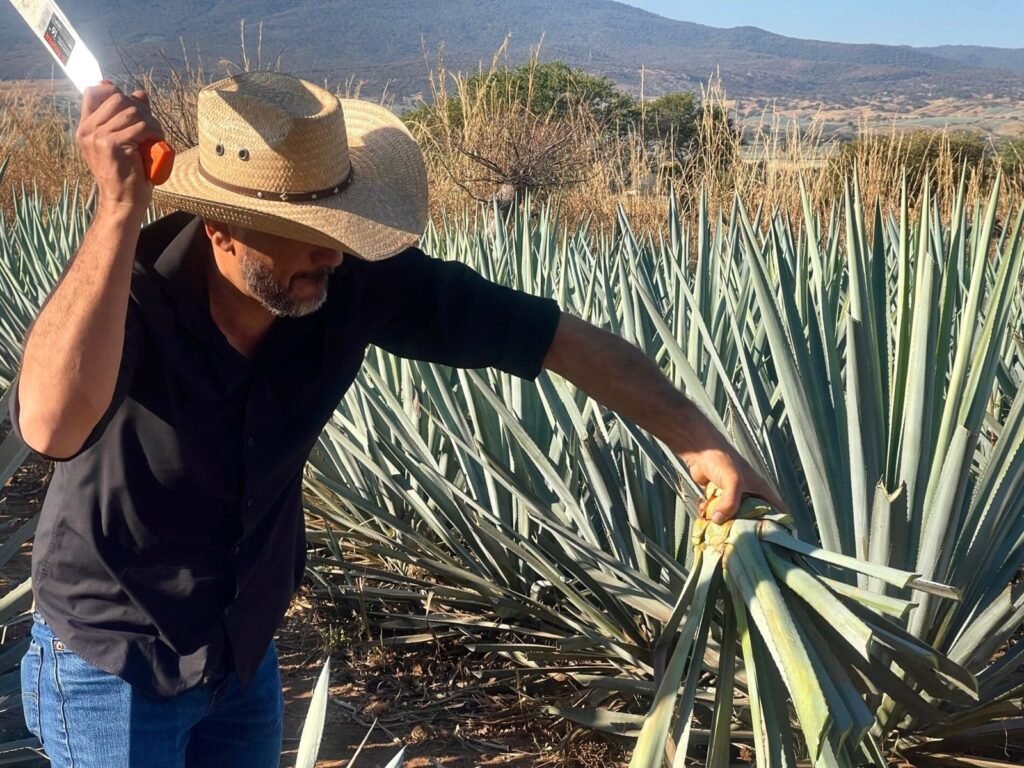
100% agave tequila is a protected Mexican spirit made using fermentable sugars derived exclusively from Agave tequilana Weber blue variety. The plant must be grown in the regions permitted by the tequila denomination of origin, and the spirit must meet Mexico’s production and labeling rules.
The words 100% de agave, 100% agave, or their permitted equivalent on a compliant tequila label identify the category. You may see a bottle labeled “Tequila” without that designation. That can still be genuine tequila, but it belongs to the other legal category.
The distinction is defined by Mexico’s official NOM-006-SCFI-2012 tequila standard, with compliance overseen through the Consejo Regulador del Tequila (CRT). This is not simply a brand’s claim about its preferred ingredients.
Tequila uses the blue Weber agave plant, not any species of agave a producer happens to grow. If you want to understand why that one plant matters, read our blue Weber agave guide.
What Is Mixto Tequila?
Mixto is the familiar industry name for the legal category labeled simply Tequila. Under the standard, at least 51% of the fermentable or reducing sugars used to make this tequila must come from blue Weber agave. Up to 49% may come from other permitted non-agave sugar sources.
Think of it as a rule about the ingredients going into fermentation. It does not mean the finished bottle contains 51% tequila and 49% syrup, and it does not mean that 49% of the drink is sugar. Those sugars are fed to fermentation, where yeast converts them into alcohol and other compounds. The resulting liquid is distilled.
A compliant mixto is not counterfeit. It is a legally defined tequila. Whether you enjoy its flavor or consider it a good value is a separate question.
100% Agave vs. Mixto Tequila at a Glance
| What to compare | 100% agave tequila | Mixto tequila |
|---|---|---|
| Official category | Tequila 100% de agave | Tequila |
| Fermentable sugar source | Exclusively blue Weber agave | At least 51% blue Weber agave; up to 49% other sources |
| Key label clue | “100% de agave” or authorized equivalent | “Tequila” without a 100% agave category claim |
| Legal status | Genuine tequila when compliant | Genuine tequila when compliant |
| Additive-free guarantee | No | No |
| Aging class | May be blanco, reposado, añejo, etc. | May be blanco, reposado, añejo, etc. |
The category is useful information, but it is only one part of the story. A producer’s choices in growing, processing, fermenting, distilling, resting, and bottling can also shape the final spirit.
What Is the Difference Between 100% Agave Tequila and Mixto Tequila?
The difference is the source of the fermentable sugars. For 100% agave tequila, all fermentable sugars come from blue Weber agave. In mixto tequila, at least 51% come from blue Weber agave, and the rest may come from other approved sources.
This distinction matters because agave takes time and care to grow. A producer using only agave-derived sugars commits to that raw material for the fermentation process. A producer making mixto may use additional fermentable sugars, which can change cost and the character of fermentation.
That does not give you an automatic taste test. You cannot know every production detail by reading one phrase on the label. Some tequilas made from 100% agave use highly industrial processing, while quality among compliant tequilas is not determined by sugar source alone.
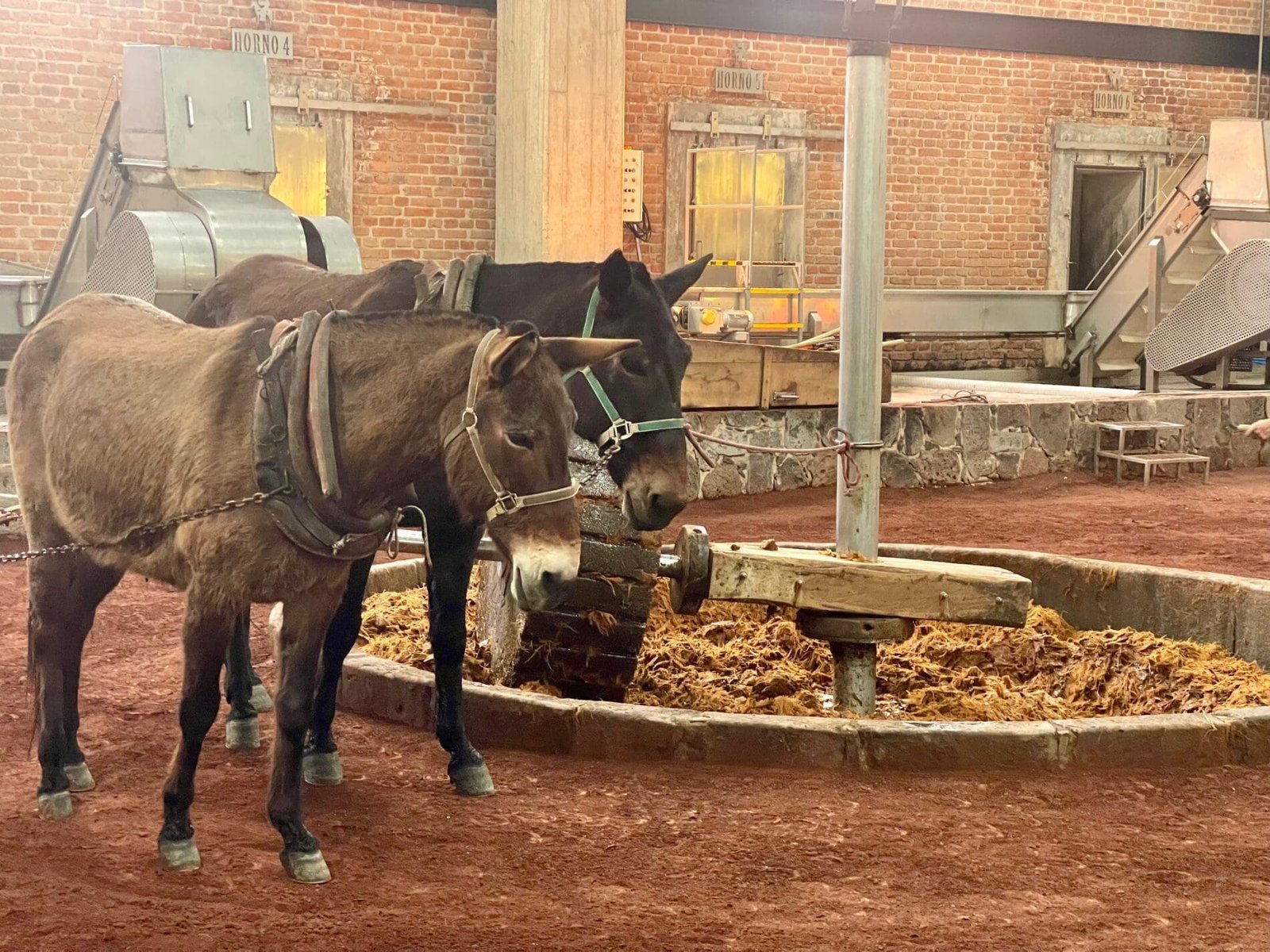
The stone mill pictured above shows a traditional way of crushing cooked agave. It illustrates a production step, not evidence that this particular distillery makes mixto tequila. The legal category depends on the sugars used for fermentation.
Why the 51% Rule Is Often Misunderstood
It’s easy to see “51%” in a product description and assume you’re buying a bottle that is almost half filler. That is the wrong way to read the standard.
First, the number concerns sugars in the production process, not the proportions of finished liquid. Second, even a tequila in the standard Tequila category must meet Mexico’s regulated criteria for source plant, origin, processing, certification, and labeling. Third, the legal 51% threshold describes the minimum blue-agave contribution, not an exact recipe shared by every producer.
This is why the expression “mixto” should not become shorthand for “fake.” When an unregulated product falsely claims to be tequila, that is an authenticity problem. When a legally made tequila uses additional sugar sources, that is a category distinction.
Knowing the category helps you ask better questions. It does not answer every question for you.
Does 100% Agave Tequila Mean It Has No Additives?
No. A bottle labeled 100% agave does not automatically certify that no additives were used. The designation concerns the source of fermentable sugars used to make the spirit. It is not, by itself, a separate additive-free certification.
Mexico’s NOM-006-SCFI-2012 addresses authorized abocado treatments, including certain permitted substances such as caramel coloring, oak extract, glycerin, and sugar-based syrup within the regulatory framework. That is a different issue from adding non-agave fermentable sugars before fermentation.
In other words, two bottles can both qualify as 100% agave while differing in how they were processed or finished. The claim on the front label does not settle every question about the liquid inside.
If additive use matters to you, look for specific, verifiable producer disclosures. Ask about production and finishing methods rather than relying on words like “natural,” “ultra-premium,” or a fancy bottle design. Also remember that “organic” and “additive-free” are different claims from “100% agave.”
Does 100% Agave Always Taste Better?
Not necessarily. Many drinkers prefer tequilas that showcase cooked agave character, but preference and quality cannot be guaranteed by a category name.
Think about what else affects a spirit. The maturity and handling of the agave, sugar extraction, fermentation, distillation, water, resting, and possible finishing treatments all contribute to the final result. Even two 100% agave blancos can taste quite different.
The better question is not simply “Is it 100% agave?” Ask, “What can the producer tell me about how it was made?”
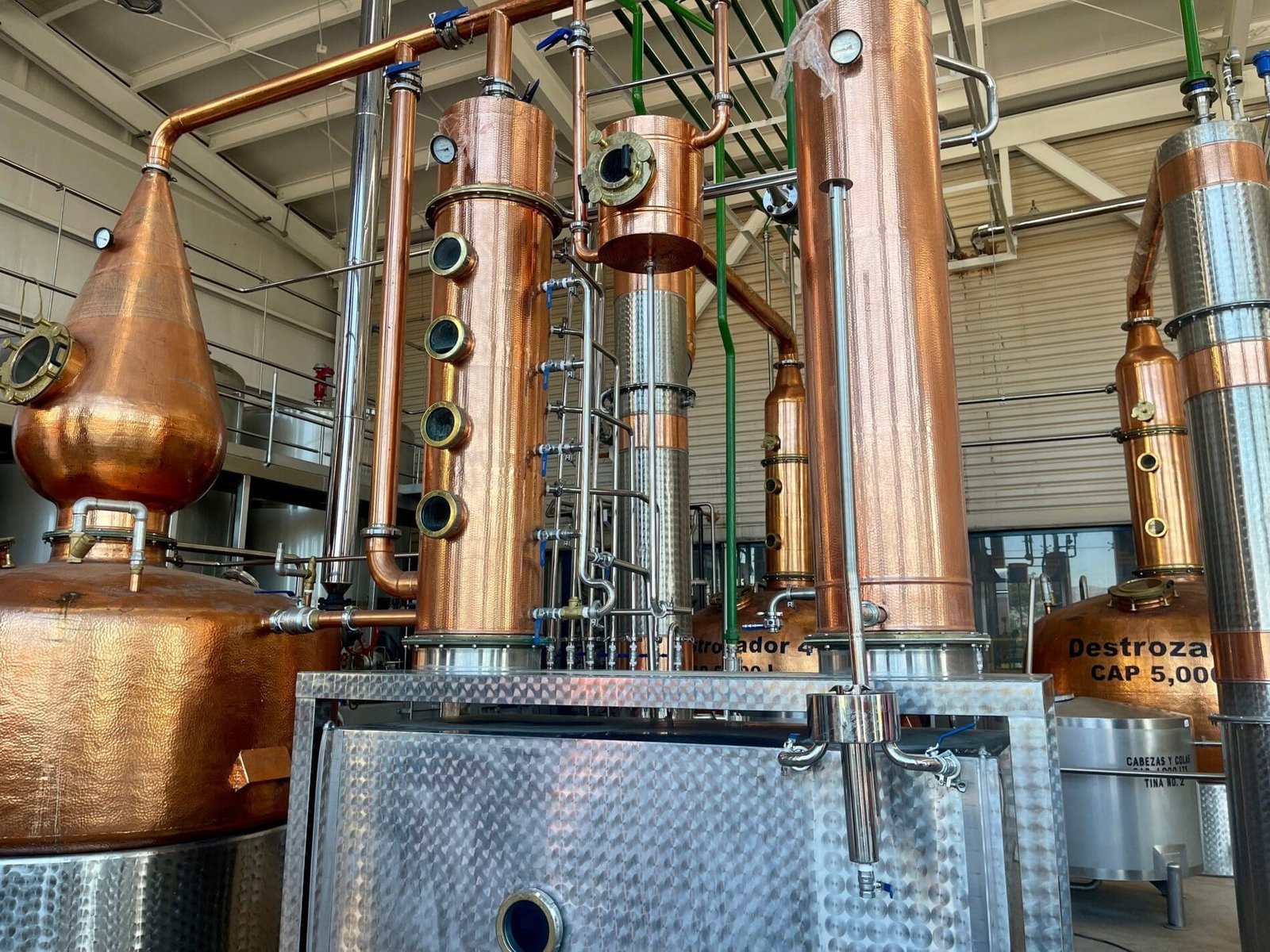
Copper and steel distillation equipment like this is one visible part of a distillery’s process. The photograph cannot tell you whether a bottle is additive-free or how much you will enjoy its flavor. For a deeper look at equipment and extraction choices, see our guide to diffuser tequila versus traditional tequila.
How to Read a Tequila Label in Five Steps
A label can tell you more than the size of the agave illustration on the front. Here’s a practical checklist to bring to a retail shelf or bar.
- Find the category. Look for “100% de agave,” “100% agave,” or the permitted equivalent. If the bottle is labeled simply “Tequila,” do not assume it is 100% agave.
- Look for the NOM identifier. This identifies the authorized producer or distillery registration and helps you research where the tequila was made. It is not a score, quality grade, or additive-free seal.
- Read the class. Blanco, reposado, añejo, and extra añejo describe different aging or resting classifications. They are not alternatives to the 100%-agave-versus-mixto category distinction.
- Check origin and producer information. Tequila’s denomination of origin places geographic limits on production. A clear producer identity makes further research easier.
- Ask what the label cannot tell you. How was the agave cooked or extracted? What happens during fermentation and distillation? Does the producer disclose any finishing treatments? Are its claims specific and independently supportable?
For a detailed explanation of where to find and how to use NOM information, read our tequila label and NOM number guide.
Three Myths Worth Leaving Behind
Myth: Mixto Is Fake Tequila
No. Mixto is a common name for tequila in the legal “Tequila” category, made with at least 51% of its fermentable sugars from blue Weber agave. If it meets the relevant requirements, it is tequila.
Myth: 100% Agave Means Zero Additives
No. The 100% claim concerns the source of sugars going into fermentation. Separate rules govern possible additions or treatments. Do not use one label statement as proof of another.
Myth: Reposado Must Be 100% Agave
No. Reposado is an aging class. “100% agave” is a category. A tequila’s category and its aging class answer different questions, so look for both on the bottle.
The Better Way to Choose Tequila
Start with the legal category, then keep asking questions. A bottle that says 100% agave tells you something meaningful about its fermented raw material. A bottle that says Tequila without that claim tells you something different. Neither phrase tells you everything about craftsmanship, flavor, additives, or value.
At DOC Agave, we believe better tequila education starts with separating what the law guarantees from what marketing suggests. Learn the category. Read the NOM. Understand the process. Then choose a bottle based on information rather than assumptions.
If you’d like to build that knowledge further, explore the DOC Agave Certified Tequila Masterclass, which covers the plant, label reading, production methods, and practical spirits evaluation.