

The tequila salt and lime ritual is familiar for a reason: it turns a pour into a fast, repeatable experience. But if your goal is to understand what is actually in the glass, salt and citrus become part of the tasting instead of staying on the sidelines.
That does not mean the ritual is “wrong.” It means tasting and garnishing are two different choices. If you want to evaluate aroma, agave character, texture, and finish, taste the tequila neat first and decide what to add afterward.
Key Takeaway: Salt and lime can be enjoyable, but they change the tasting experience. If your goal is to evaluate tequila, start neat at room temperature in a nosing-friendly glass. Take a small first sip, then judge agave character, aroma, texture, and finish before adding anything.
Why do people drink tequila with salt and lime, and should you?
People drink tequila with salt and lime because the combination makes a shot feel easier to take and has become a familiar bar ritual. You do not need the ritual to drink tequila, and if your goal is to evaluate a well-made spirit, tasting it neat first gives you more information.
If you have ever wondered why salt and lime with tequila became such a common pairing, the practical answer matters more than an oversimplified origin story. Salt adds its own taste. Lime adds acidity, aroma, and citrus flavor. Once those are in the experience, you are no longer evaluating the tequila by itself.
The sequence is also easy to remember: salt, tequila, citrus. That makes it simple to repeat in a social setting and helps explain why the habit feels automatic for many drinkers. But a familiar ritual is not evidence that tequila needs those ingredients.
The best way to drink tequila depends on what you want from the glass. For a party ritual or a personal preference, add what you enjoy. For tasting, start with the spirit alone so you can identify what is coming from the tequila before you add another strong flavor.
What salt and lime actually change in a tasting
Salt does not simply “turn off” your taste buds, and lime does not literally seize one part of your palate. Taste mixtures are more complicated than that. Research on taste interactions shows that combining salty, sour, sweet, and bitter stimuli can produce suppression or enhancement depending on concentration and context.
That is why the useful point is sensory rather than dramatic: salt and lime add signals of their own. They can change the balance of what you notice, while the lime also contributes a strong aroma before the tequila reaches your mouth. If you are trying to read a tequila flavor profile, those additions make it harder to isolate the spirit’s own aroma, taste, texture, and finish.
Your nose matters as much as your tongue in this comparison. Smell the tequila before adding anything, then notice how different the experience becomes after citrus enters the picture. The goal is not to prove that lime “ruined” the pour; it is to recognize that you are now tasting a combination rather than the spirit alone.
This distinction is especially useful with tequila because much of what makes one pour different from another can be subtle. Cooked agave, pepper, citrus peel, herbs, earth, minerals, fermentation character, and barrel influence may show up with different intensity from bottle to bottle. Salt and lime do not make those notes disappear by magic, but they can compete with them.
For more on taste-mixture interactions, see this review of flavor and sodium research: taste interactions involving salt. The research is useful precisely because it shows why simple claims about “numbing” or universal masking are too crude.
100% Agave, the Tequila category, and the quality question
It is important not to turn this discussion into “100% agave good, mixto bad.” Mexico’s tequila rules define categories, not a complete quality score.
The Consejo Regulador del Tequila states that Tequila 100% Agave is made from 100% of the sugars of Agave tequilana Weber blue variety. The broader Tequila category can be made with at least 51% blue-agave sugars and up to 49% other reducing sugars. The official Mexican registry currently lists NOM-006-SCFI-2012 as the standard governing tequila specifications.
What enthusiasts often call “mixto” belongs to that broader Tequila category. But the category alone does not tell you every detail about farming, cooking, extraction, fermentation, distillation, maturation, additives, or final sensory quality. Those production choices deserve their own evaluation.
The reverse is also important: a 100% Agave label is useful information, but it does not guarantee that every production decision was made for maximum flavor. Think of the category as one piece of evidence. Then look at how the agave was handled and, most importantly, what the finished tequila actually gives you in the glass.
I have been all over Oaxaca, Jalisco, and other parts of Mexico visiting agave producers. One lesson from spending time around production is that labels, methods, and flavor should not be collapsed into one shortcut. If you want a deeper look at how production can change what reaches the glass, read diffuser tequila vs traditional production.
How should you sip tequila if you normally use salt and lime?
Pour a small amount at room temperature into a copita, tulip-shaped tasting glass, or small wine glass. Smell gently, take a small first sip, and pause. On the next sip, evaluate agave character, aroma, flavor, texture, and finish before adding salt, lime, ice, or a mixer.
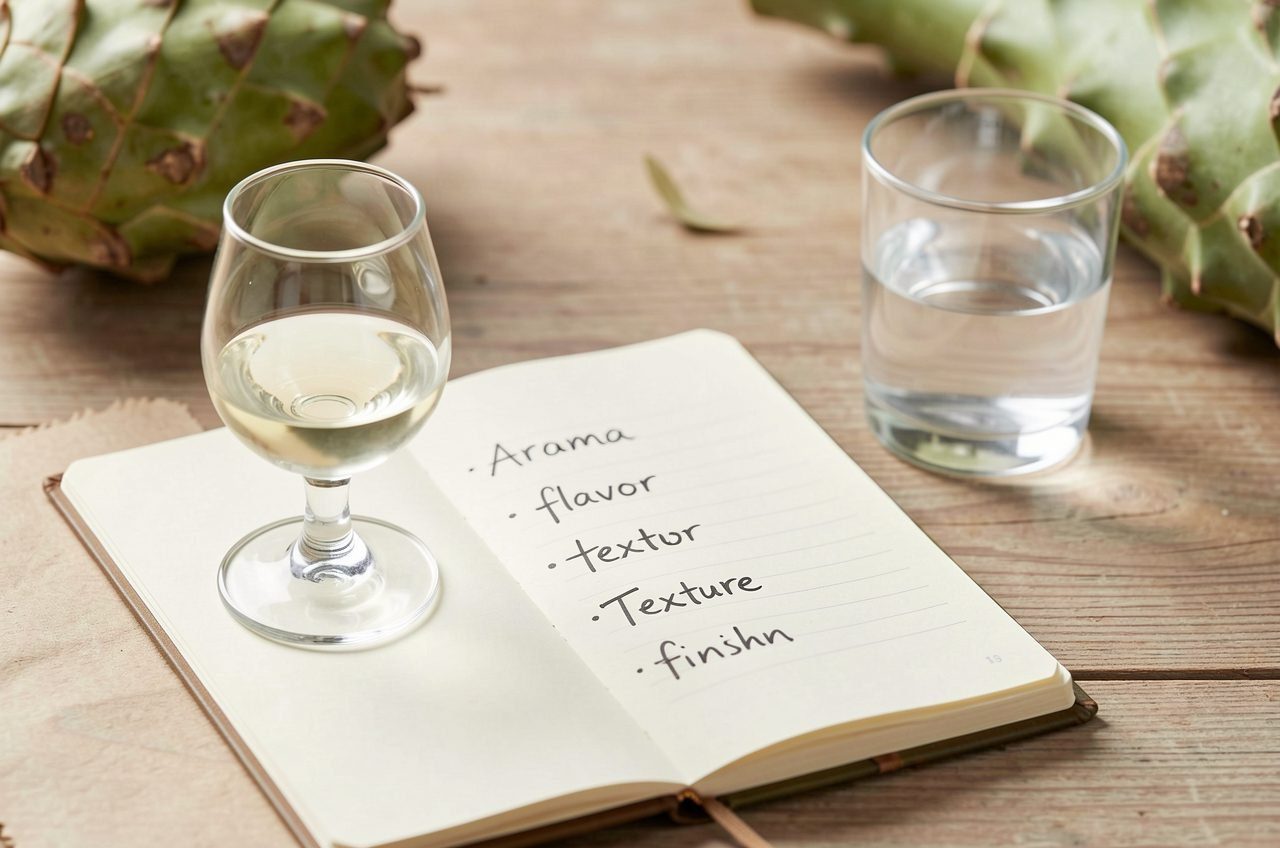
Learning how to sip tequila is less about ceremony than attention. You do not need specialized vocabulary, and you do not need to identify ten tasting notes. Start with a simple sequence:
- Pour a small tasting amount rather than a full shot.
- Smell gently instead of pushing your nose deep into the glass.
- Take a small first sip and give your palate a moment to adjust.
- On the next sip, look for one or two clear tequila tasting notes.
- Notice the finish before deciding whether you want to add anything.
Do not turn the first sip into a stopwatch exercise. A small opening sip can help you settle into the alcohol and temperature, but the useful habit is simply to slow down. On the next sip, ask one concrete question: what do I notice now that I did not notice at first?
If you want a deeper framework for evaluating a pour, use the complete tequila tasting guide. It gives you a repeatable way to compare aroma, flavor, mouthfeel, and finish without turning tasting into a performance.
Glassware, aroma, and tequila tasting notes
Glassware will not rescue a poor tequila, but it can make aroma easier to notice. A nosing-friendly shape narrows toward the rim and helps keep aroma near your nose. That is one reason a copita, tulip-shaped glass, or small white wine glass works well for deliberate tasting. A wide-open vessel—or a glass designed mainly for shooting—does less to hold aroma near your nose.
For the full comparison, see the DOC Agave guide to proper tequila tasting glasses. You do not need to buy a collection of specialty glasses before you can taste well; a clean, appropriately shaped glass is enough to start.
Once the glass is doing its job, keep your tequila tasting notes concrete. Start with cooked agave. Then ask whether you notice pepper, citrus peel, herbs, earthy or mineral impressions, fermentation-driven fruit, or oak when the tequila has been aged. You do not need to find every note, and a specific bottle may show none of the examples above.
Texture and finish matter too. Notice whether the tequila feels light, oily, sharp, soft, drying, warming, or persistent, then pay attention to what remains after you swallow. These observations help you build a memory for a tequila even when you cannot name every aroma.
The goal is not to prove that your palate is sophisticated. It is to build a memory for what different tequilas actually taste like. If you want examples of agave-forward producers and how production choices can show up in the glass, see these agave-forward tequila examples.
When salt and lime still make sense
If you enjoy salt and lime, there is no reason to treat that preference as a mistake. The useful distinction is whether you are trying to evaluate the tequila or simply enjoy a ritual.
If your question is how to drink tequila properly, there is not one moral rule for every situation. For tasting, neat-first is the clearest method because it gives the spirit a chance to show you what it tastes and smells like before you change it. After that, add lime, salt, ice, a mixer, or nothing at all.
The same logic applies to cocktails. In a Margarita or Paloma, citrus is supposed to be part of the drink, so judging the tequila in isolation is not the point. The mistake is not adding citrus; it is assuming the garnished or mixed experience tells you exactly what the tequila tasted like on its own.
That principle also works when you are comparing bottles. Keep the first pass consistent. Use the same glass style, similar pour size, similar temperature, and no garnish. Once you have a baseline, personal preference can take over.
FAQ
Should tequila be chilled or served at room temperature for tasting?
For deliberate tasting, room temperature or slightly cool tequila usually makes aroma easier to notice than a heavily chilled pour. Very cold service can make aroma feel quieter, which may be useful for refreshment but less useful when you are comparing flavor.
What glass is best for sipping tequila?
A copita or tulip-shaped tasting glass is a strong choice because it helps concentrate aroma. A small white wine glass is also practical. The important point is to use a glass that lets you smell the spirit comfortably before you sip.
Can I add lime after I taste the tequila neat?
Yes. Tasting neat first is not a rule against garnishes. It is simply a way to set a baseline, so when you add lime or salt you can tell how the experience changed.
Do reposado or añejo tequilas need salt and lime?
No tequila class requires salt and lime. Reposado and añejo can bring oak, spice, vanilla-like, dried-fruit, or other maturation notes into the experience, depending on the barrel and the tequila. Taste them on their own first if you want to understand what aging contributed.
Taste first, garnish second
Tequila salt and lime does not need to be a fight between “serious” drinkers and everyone else. The better distinction is tasting versus seasoning. If you want to understand the tequila, give it one clean pass first.
That approach lets you judge the tequila on its own terms, then choose what makes the glass more enjoyable for you. It also makes future comparisons easier because you have a consistent baseline instead of changing the tasting conditions with every bottle.
Go deeper with the DOC Agave Tequila Masterclass if you want a structured field-to-glass framework for production methods, tasting, and tequila quality.